 There’s a constant tug of war playing out on the national stage. On one side, privacy advocates are pushing for greater autonomy for end users, and hard limits to the types of searches that law enforcement agencies are allowed to conduct.
On the other side are the government agencies themselves, which often cite national security concerns as the justification for more and easier access to the sensitive data contained on personal devices like laptops and smartphones.
Generally speaking, the privacy advocates lose those battles. This was the case recently, when the CBP (the US Customs and Border Protection agency) published their latest electronic search guidelines. The most significant change is that the new guidelines explicitly define the difference between basic and advanced searches.
CBP agents are authorized to choose any travel, with or without cause or suspicion, for basic searches. Under the clarified rules, a basic search is limited to an examination of data found on the device itself, which is accessible through already installed apps, or through the device’s OS.
Advanced searches may be conducted, but agents must demonstrate that there’s a reasonable suspicion of criminal activity, or that the person carrying the device represents a “national security concern.”
The individual singled out for an advanced search may be permitted to be present while the search is conducted, but are not permitted to view the actual search itself for fear of revealing law enforcement techniques. Of significance, even during the conduct of an advanced search, agents are not permitted to search cloud-based data. They are restricted to data stored on the device itself.
While none of this sounds especially heavy-handed, the biggest complaint privacy advocates have about the updated rules is the fact that border agents can, at their own discretion, still carry out warrantless searches without any judicial oversight whatsoever.
Although this may not impact you directly, it pays to be mindful of the recent changes.

President & CEO
I hope you enjoyed this article. My mission is to take your stress away from dealing with IT problems. Call (252) 565-1235 or send me a message at our contact us page if you have a question, comment or want help.
 The owners of Android devices have been able to properly view vertical videos for more than two years, but for Apple users, it was a different story.
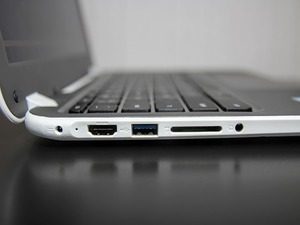 Chromebooks have brought Android apps to a much wider market, making them accessible to virtually everyone, but the Chrome OS has always lagged behind other platforms developmentally.
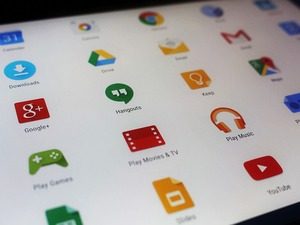 How many apps do you have on your smartphone? Do you know how much data they’re collecting about you?
 Google recently found itself in a bit of hot water after an investigation by Quartz revealed that the company was intrusively collecting location data on literally every Android device in use today. That’s billions of devices all over the globe.
 Google’s Play Store is under siege. In recent month, there has been a sharp spike in malware campaigns launched against the store, with a shocking number of poisoned apps slipping past Google’s robust system of checks designed to prevent, or at least minimize such occurrences.
 “Fool me once, shame on you. Fool me twice, shame on me,” as the saying goes. Unfortunately, Google has now been fooled by the same trick twice.