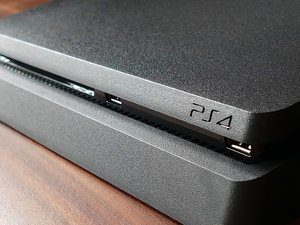
 Gamers take the games they play seriously. So seriously, in fact, that they’re not above resorting to dirty tricks to score a win.
Recently, social media has been abuzz with reports of a messaging app bug on Sony’s PlayStation devices. Specifically, there’s a bug in both the Android and iOS messaging apps that allow malicious gamers to send a poisoned character via group chat that will brick your gaming console.
If you’re in the middle of a tense death match, you lose by default, because you’re booted from the system entirely.
Here’s an example of what we’re seeing on Reddit:
“There is a new glitch that basically bricks your console and forces you to factory reset it. Even deleting the message from the mobile app doesn’t work. It happened to me during Rainbow Six: Siege. A player from the other team used a dummy account to send the message and crashed my entire team. We all have had to factory reset. Only one of our guys wasn’t affected, and he has his messages private.”
This note holds the key to the workaround until Sony makes some type of official response. If you haven’t yet had the dubious honor of being the recipient of this poisoned message, set your messages to private immediately.
Here’s how you do that:
Go to “Settings” and select “Account Management, Privacy Settings”
Enter your password
Select “Messages” and change it to either “Friends Only” or “No One,” then exit out of the subsystem. You’re all set from there.
If you’d rather change your message settings from your PC and a web browser, you can do that too, though the process is a bit different.
Here’s how:
From your PC, surf your way to the PSN Privacy Settings Management Page
Log in with your PS4 account
Select “Personal Information/Messages”
Select “Edit,” then change the setting to either “Friends Only” or “No One.” Save and exit.

President & CEO
I hope you enjoyed this article. My mission is to take your stress away from dealing with IT problems. Call (252) 565-1235 or send me a message at our contact us page if you have a question, comment or want help.
 Western Digital has a big problem, and if you use the company’s “My Cloud” network-attached storage (NAS) storage devices, you’ve got one too. The WD My Cloud service is enormously popular because it’s so convenient, allowing both business owners and individuals to store their files, perform periodic backups, and of course, access their data from anywhere in the world.
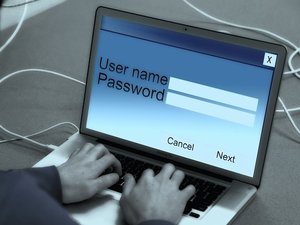 Perhaps the most significant change to the browser is the addition of a new password manager, which will offer to generate a random password when you sign into a website for the first time. The randomly generated password will be securely tucked away inside your Google Account and synced across both desktop and mobile versions of Chrome.
 If you fly Air Canada and use their mobile app, it may be time to change your password. The company recently announced that between August 22nd and August 24th of this year, they detected “unusual log-in behavior,” and that a small fraction (some 20,000) of their 1.7 mobile app users may have had their data compromised as a result.
 According to a recent survey conducted by Pew Research Center, 54 percent of teens say that they spend too much time on their cellphones.
 Nothing bad could possibly happen to your company’s network if the only piece of information the hackers have is your fax number, right?
 File this one away under “unintended consequences.” There’s a newly emerging trend in the medical community called “Snapchat Dysmorphia” that’s leaving plastic surgeons around the country to sound the alarm, and in some cases, scratch their heads in disbelief.
 There’s a new, surprisingly elaborate phishing scam targeting iPhone users. The scam starts with an email informing users that their phones have been locked due to “illegal activity” and instructing them to call “Apple Care” to get the problem fixed.
 File this away under things you already knew. Coronet recently released a report entitled “Attention All Passengers: Airport Networks Are Putting Your Devices & Cloud Apps At Severe Risk,” and the news is about what you’d expect.
 On May 14th, the Billings Clinic in Montana issued a breach notification statement, which explained that they detected unusual activity within one of its employee’s email accounts.