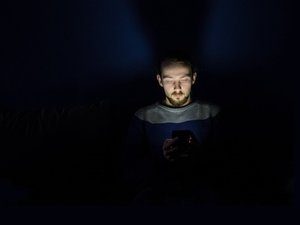
 Can you imagine life without the always-on internet? If you’re like most people today, it’s a simply indispensable tool, and the thought of suddenly being without it makes you shudder and brings images of the Dark Ages to mind.
It’s glorious, no doubt, and it really is a remarkable tool, but unfortunately, it’s not all upside. A recent study funded by the European Research Council has concluded that access to broadband internet access costs you as much as 25 minutes of lost sleep every night. Considering that most of us are already getting by on far too little sleep, that’s not good.
Luca Stella, one of the researchers responsible for the study, had this to say about it:
“Internet addiction and technology use near bedtime are often blamed as a major cause of the sleep deprivation epidemic. Yet the empirical evidence on this relationship is still limited. In our study, we first show descriptive evidence that the use of digital services at night is correlated with shorter sleep duration. Then, exploiting differences in the access to high-speed internet caused by the pre-existing telephone infrastructure in Germany, we analyze the relationship between high-speed internet and sleep. We find that access to broadband internet reduces sleep duration and sleep satisfaction.”
While the report is clearly bad news, in many ways, it merely confirms what we already knew. It seems self-evident that if you spend time surfing the web just before bed, you’re probably going to get sucked in, which is going to cut further into your already limited sleep time. Sure enough, we now have evidence that supports this notion.
What is interesting in the report, and something that runs counter to most people’s assumptions, is that people in the 30-59 year age range suffered more sleep loss than those in the under 30 crowd.
A fair question then, is how much sleep are you getting? If you’d like more, it might be time to consider curtailing late-night internet use.

President & CEO
I hope you enjoyed this article. My mission is to take your stress away from dealing with IT problems. Call (252) 565-1235 or send me a message at our contact us page if you have a question, comment or want help.
 Facebook and Instagram are rolling out new tools designed to help manage how much time you’re spending on those two social media platforms.
 There’s a new, surprisingly elaborate phishing scam targeting iPhone users. The scam starts with an email informing users that their phones have been locked due to “illegal activity” and instructing them to call “Apple Care” to get the problem fixed.
 A dark day for Lifelock, the Identity Theft Protection company. It has recently come to light that the company may have accidentally exposed their customers to additional attacks.
 Microsoft has made numerous ventures into the smartphone ecosystem, but so far, they’ve only been met with limited success. This time, they’re trying something a little different.
 Twitter has long had a reputation for being at the mercy of bots that have been used to sway public discourse and opinion.
 If you’ve used Windows 10 for any length of time, you’ve probably had this happen to you. You’re right in the middle of working on something important, and all of a sudden, your OS decides it would be a great time to install some updates!
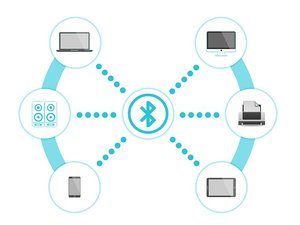 There’s a new Bluetooth security vulnerability to be aware of, tracked as CVE-2018-5383, and it’s a nasty one.
 The girl scouts have officially moved into the 21st century.
 If you’re like most people, you probably rely heavily on the GPS function of your phone. Type in an address and your phone helpfully guides you, turn by turn, to your destination. It’s one of the most often utilized features of a smartphone, and of course, the hackers are very interested in interfering with it.