 Facebook and Instagram are rolling out new tools designed to help manage how much time you’re spending on those two social media platforms.
On Facebook, the new feature is called “your time on Facebook,” and on Instagram, it’s called “Your Activity,” but both features do essentially the same thing.
They monitor and report on how much time you’re spending on the platform and can be fine-tuned by users to temporarily mute your push notifications.
The changes are being rolled out in an effort to address concerns that a number of groups are now raising. The concerns are about the addictive feedback loops built into social media apps. These feedback loops have been demonstrated to have a negative effect on the well being of users who get sucked in too deeply.
The new features will be rolled out to 99 percent of the users on each platform. The company is withholding the new features from 1 percent to allow for comparative testing.
Once they become available, the new features can be found under the “Hamburger Menu,” which is the nickname for the three vertical lines at the top right-hand corner of the Facebook app. On Instagram, the new feature can be found under the settings menu, accessible by tapping the gear icon on your Instagram profile.
It remains to be seen whether these new features will have the desired effect. Since they have to be manually activated, odds are that the impact will be minimal. For a certain subset of users who seem not to be able to control their social media addiction on their own, it might provide just enough of a boost to make a difference.
Even if that proves not to be the case, it’s clear that the company takes the matter seriously, so we can expect to see more from them on this front in the months ahead.

President & CEO
I hope you enjoyed this article. My mission is to take your stress away from dealing with IT problems. Call (252) 565-1235 or send me a message at our contact us page if you have a question, comment or want help.
 There’s a new, surprisingly elaborate phishing scam targeting iPhone users. The scam starts with an email informing users that their phones have been locked due to “illegal activity” and instructing them to call “Apple Care” to get the problem fixed.
 Microsoft has made numerous ventures into the smartphone ecosystem, but so far, they’ve only been met with limited success. This time, they’re trying something a little different.
 Twitter has long had a reputation for being at the mercy of bots that have been used to sway public discourse and opinion.
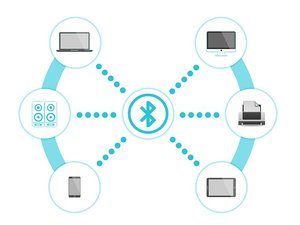 There’s a new Bluetooth security vulnerability to be aware of, tracked as CVE-2018-5383, and it’s a nasty one.
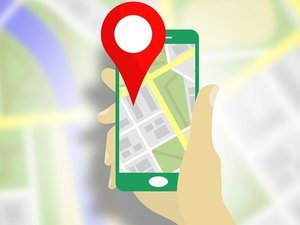 If you’re like most people, you probably rely heavily on the GPS function of your phone. Type in an address and your phone helpfully guides you, turn by turn, to your destination. It’s one of the most often utilized features of a smartphone, and of course, the hackers are very interested in interfering with it.
 Apple recently released an updated version of iOS, 11.4.1. They did so quietly, and without much fanfare, but the update includes one very powerful and exciting security update that’s deserving of special attention.
 Researchers from Ruhr-Universität Bochum and New York University in Abu Dhabi have discovered serious security flaws in 4G LTE networks that allow hackers to spy on, listen in on, intercept, and disrupt phone calls and text messages.
 As most people know, Microsoft Edge was the company’s “reboot.” After trying for years to patch and update their beleaguered Internet Explorer, Microsoft ultimately decided to scrap it and start fresh. Since Edge’s launch, it has struggled to gain traction with users.
 Researchers at Okta Security have stumbled across something big. Recently, they discovered a flaw in Apple’s OS that would have allowed hackers to completely undermine Apple’s code signing process.