 Do you use the image hosting service, Imgur? If you do, there’s a slight chance that you’ll be prompted to change your password the next time you log on. That’s because the company’s servers were breached in 2014, and the hackers made off with 1.7 million usernames and passwords, which represents just a tiny fraction of the company’s 150 million users.
Although the breach happened a few years ago, the company only found out about it on Thanksgiving Day of this year. Their response was immediate and decisive. The company called people in over the holiday and notified their impacted users just 25 hours and 10 minutes after discovering the details of the incident.
Contrast that to Uber’s handling of their most recent hack. They kept their impacted users in the dark for more than a year, and worse, paid the hackers $100,000 to keep the incident quiet. It’s easy to see why security professionals around the world have lauded Imgur for their handling of the hack.
Three key things to note in relation to the breach:
Not much information was stolen during the hack because Imgur doesn’t ask its users for much in the way of personal information in the first place. However, if you use your Imgur password on other systems, you could be at additional risk.
At the time of the breach, Imgur was using SHA-256 encryption, which is fairly robust and impractical for most hackers to crack due to the amount of computational power required.
In 2015, the company switched to an even more secure algorithm, Bcrypt, so if the company is breached again in the future, it’ll be even harder for the hackers to glean anything useful from any data stolen.
All that to say, if you’re looking for a benchmark to compare yourself to if you’re ever hacked, Imgur’s example would be an excellent one to follow.

President & CEO
I hope you enjoyed this article. My mission is to take your stress away from dealing with IT problems. Call (252) 565-1235 or send me a message at our contact us page if you have a question, comment or want help.
 Cottage Health System, a company that operates five hospitals in the Santa Barbara area of California, is the latest firm to have been hit with a hefty fine for losing control of PHI and PII for patients that it serves.
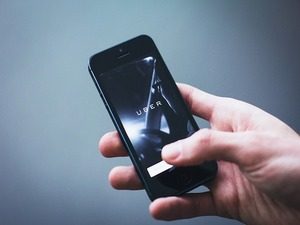 It has recently come to light that the company was hacked in 2016 in a massive breach that exposed the personal information of more than 57 million Uber users and drivers. A wide range of data was stolen. Where users were concerned, names, email addresses, and phone numbers were compromised.
 Security researcher Jaromir Jorejsi of Trend Micro has discovered a disturbing new strain of ransomware named qkG that spreads by way of macros inside MS Word.
 This past summer, an Italian security researcher named Manuel D’Orso discovered a nasty malware attack aimed at WordPress sites.
 Do you have an Android phone? Is it running either Lolipop, Marshmallow or Nougat? Those three account for slightly more than 75 percent of the Android phones in service today, so odds are excellent that you do. If so, you should be aware of a nasty vulnerability that could allow a hacker to perform at-will screen captures and audio recording without your knowledge.
 Google recently found itself in a bit of hot water after an investigation by Quartz revealed that the company was intrusively collecting location data on literally every Android device in use today. That’s billions of devices all over the globe.
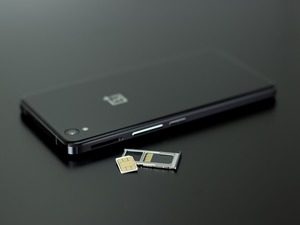 OnePlus phones have been getting plenty of bad press lately, thanks to malicious apps found to be factory-installed on a percentage of the devices, along with some intrusive data collection features the manufacturer has installed. As it turns out, though, the story gets worse.
 The world’s hackers have been busy according to the latest report by Comodo security, which tracks the total number of threats around the globe, quarter by quarter. The latest statistics are alarming, showing a massive jump in the total number of malware infections reported in the third quarter of 2017. Reports show nearly 400 million infections.