 Microsoft’s stock price is surging, putting the company’s total valuation at $753 billion. This makes it the third most valuable company on the planet, behind Amazon (782 billion), Apple ($923 billion) and leaving Google in fourth place, valued at $739 billion.
Google first overtook Microsoft in 2012, and since that time, the two companies have traded places repeatedly. So Microsoft’s current 3rd place position is expected to be relatively short-lived.
It’s worth noting, however, that since Satya Nadella took over for Steve Ballmer, Microsoft’s stock price has more than doubled, the company has moved decisively into some new areas, and has been dramatically refocused.
Some of those changes include:
A big emphasis on cloud-based technologies
A heavy emphasis on artificial intelligence
Big investments in quantum computing
Equally large investments in mixed-reality headsets
An emphasis on cross-platform technologies
Even more significantly, the company has veered away from two areas that had long been Microsoft staples. The company has abandoned efforts to develop a Windows-based smartphone, and has moved away from the strategy of putting Windows at the center of everything Microsoft.
Although Google is likely to regain its #3 market cap position in the near future, Microsoft has some important strategic advantages over both Google and Apple that will serve it well in the long run. The most significant of these is the fact that it has a much more diverse revenue stream.
Google gets some 90 percent of its income from advertising, and Apple gets some 60 percentof its income from the venerable iPhone. Microsoft, based on the most recent quarterly report, is generating 35 percent of its income from the Surface and its gaming division, another 30 percent from its cloud-based services, and a similar percentage from Office and the company’s various productivity tools.
 If you use Apple products, you may have noticed an annoying “feature”. If you’re using the messaging app on your phone and texting someone and then you move to your Mac and access the same program there, the conversation you were having on your phone isn’t present. The two devices are messaging islands that can’t reliably communicate with each other. Since they can’t, you can’t start a conversation on one device and then pick it up later on another.
 Karanbir Singh (a program manager at Microsoft) is on a mission:
 Coca-Cola is the latest company to fall victim to a data breach. Unlike some of the others that have recently made headlines, however, this one was conducted from within.
 If you’ve been considering swapping out some of your old HDDs to SSDs, now is a great time to do so, thanks to the convergence of two factors.
 The news just keeps getting worse for Equifax. The company has already had to revise their estimates of how many people were impacted by last year’s breach more than once, and now, they’re having to revise their estimate yet again. This latest revision comes after company officials had to testify before Congress, which has been formally investigating the matter.
 Security researchers at the Electronic Frontier Foundation (EFF) have discovered a dangerous new email vulnerability called “Efail.” Exploiting this new email vulnerability would allow hackers to decrypt emails encrypted with either PGP or S/MIME – including emails that were sent several years earlier. Both of these encryption tools are commonly used by politicians, journalists and other professionals who need a secure means of electronic communication. Since the standards are so well established, they’re used widely and regarded as fool-proof. Sadly, that’s no longer the case.
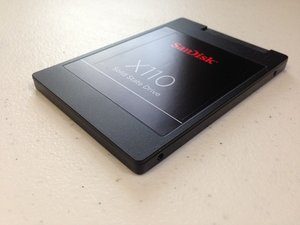 Big changes are in the works in the SSD-based storage ecosystem. It includes three different vendors all making similar announcements regarding designs to help companies that rely on SSD-based storage systems to reduce duplication and control data creep.
 Brinker International (the parent company of the Chili’s restaurant chain) formally announced that on May 11, they discovered malware on an undisclosed number of their point of sales terminals. Details are sketchy at this point, because the investigation is still ongoing, but the company had the following to say about the incident:
 An identity threat company called 4iQ has recently published a report called “Identities in the Wild: The Tsunami of Breached Identities Continues.” Unfortunately, the information in the report contains all bad news. Some of the details are simply confirmations of things we already knew, and some are shocking statistics that will leave you feeling dismayed.