
 The on-again, off-again talks about a merger between T-Mobile and Sprint is definitely back on, with T-Mobile planning to buy Sprint for a staggering $26 billion.
The deal has been in the works since before Trump was elected President. It died quietly when it became clear that the Obama administration would not allow the deal to go forward, due to concerns that it would leave the US with only three telecom providers, which could harm consumers.
The Trump administration has made it clear that they applaud the move. However, Trump’s Justice Department may be a significant hurdle to clear. Nonetheless, as things stand now, the deal is steaming ahead and the combined company would have a whopping 127+ million customers, putting it not far behind AT&T’s 141.6 million and Verizon Wireless’ 150.5 million customers. T-Mobile’s CEO John Legere would lead the new, larger company.
John had this to say about the planned merger:
“This combination will create a fierce competitor with the network scale to deliver more for consumers and businesses in the form of lower prices, more innovation, and second-to-none network experience – and do it all so much faster than either company could on its own.”
The underlying argument in favor of the merger is that the US is falling behind in terms of network speed. If there is to be any hope of arriving first at a nationwide 5G network, we need bigger, stronger and more robust competitors.
As history shows us clearly though, the regulators of the previous administration have valid concerns about the monopolization of the industry. Any time there are fewer competitors on the board, regardless of the industry, consumers invariably get hit with higher prices. There’s no reason to believe this merger will lead to a different outcome.
Regardless, it now appears that the merger is likely to happen.
 Thanks to researchers Daan Keuper and Thijs Alkemade (who work at the Dutch cyber-security firm Computest), newly produced Golf GTE and Audi A3 vehicles are a little bit safer, and a lot less vulnerable to remote hacks.
 Score one for the good guys, but with hesitation. Unfortunately, in today’s fast-moving digital world, even a victory doesn’t mean the end of a problem.
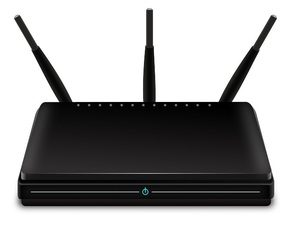 After more than two decades in the business, Apple is officially going to stop selling routers. The writing has been on the wall for a while now, since the company’s “AirPort” family of products hasn’t received a significant update in more than five years.
 Security researcher Assaf Baharav from Check Point Security has discovered a new twist on an old, fairly well-known attack. He was able to essentially “weaponize” PDFs to steal Windows credentials stored in NTLM hashes. Unfortunately, no action other than simply opening the PDF is required for the hacker to gain access to the information.
 Owners of Apple devices have a new attack vector to worry about, called “TrustJacking.” Symantec researchers recently stumbled across a pair of scenarios that take advantage of Wi-Fi syncing of various Apple devices. These are scenarios that also take advantage of the trust users have in the security of their own devices, allowing hackers to take complete control over those devices.
 Recently, a new strain of malware called “SquirtDanger” has been found by researchers at Palo Alto Networks Unit 42, and it’s a particularly nasty one for a couple of reasons. First and foremost, the owner of the malware isn’t orchestrating campaigns himself, but rather, selling his product as a commodity on the Dark Web.
 Researchers at the University of Washington just might change the face of computers and computing forever. It may seem like the stuff of science fiction, but based on their research, the day may soon be coming when computing devices are completely un-tethered, requiring no wires for either power or recharging.
 Atlanta-based SunTrust Bank is the 12th largest bank in the US. They have a major problem, and so do roughly a million and a half of its customers. According to CEO William Rogers, an unidentified employee of the firm printed a vast amount of private customer information, including their names, addresses, phone numbers and account balance information.
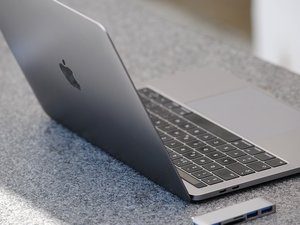 If you recently bought a 13-inch MacBook Pro (without a Touch Bar), you’ll want to head to Apple’s website. The company didn’t make a big announcement, but they’ve quietly introduced a battery replacement program that impacted what the company described as a “limited number” of laptops.

