 There’s a constant tug of war playing out on the national stage. On one side, privacy advocates are pushing for greater autonomy for end users, and hard limits to the types of searches that law enforcement agencies are allowed to conduct.
On the other side are the government agencies themselves, which often cite national security concerns as the justification for more and easier access to the sensitive data contained on personal devices like laptops and smartphones.
Generally speaking, the privacy advocates lose those battles. This was the case recently, when the CBP (the US Customs and Border Protection agency) published their latest electronic search guidelines. The most significant change is that the new guidelines explicitly define the difference between basic and advanced searches.
CBP agents are authorized to choose any travel, with or without cause or suspicion, for basic searches. Under the clarified rules, a basic search is limited to an examination of data found on the device itself, which is accessible through already installed apps, or through the device’s OS.
Advanced searches may be conducted, but agents must demonstrate that there’s a reasonable suspicion of criminal activity, or that the person carrying the device represents a “national security concern.”
The individual singled out for an advanced search may be permitted to be present while the search is conducted, but are not permitted to view the actual search itself for fear of revealing law enforcement techniques. Of significance, even during the conduct of an advanced search, agents are not permitted to search cloud-based data. They are restricted to data stored on the device itself.
While none of this sounds especially heavy-handed, the biggest complaint privacy advocates have about the updated rules is the fact that border agents can, at their own discretion, still carry out warrantless searches without any judicial oversight whatsoever.
Although this may not impact you directly, it pays to be mindful of the recent changes.

President & CEO
I hope you enjoyed this article. My mission is to take your stress away from dealing with IT problems. Call (252) 565-1235 or send me a message at our contact us page if you have a question, comment or want help.
 Remember the KRACK WiFi (WPA2) vulnerability, discovered by Mathy Vanhoef? It turns out that his discovery was a catalyst for action. Recently, the WiFi Alliance, which is the industry’s standards organization, released details about its new WPA3 protocol.
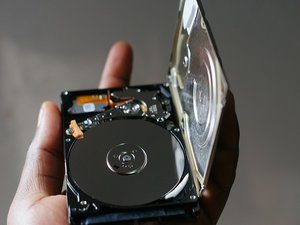 What’s an HDD manufacturer to do when faced with competition by faster, more efficient SSD drives?
 Recently, a group of investors wrote an open letter to Apple, urging the company to do more in regards to offering better and more robust parental controls on the devices the company makes. Although the group of investors control some $2 billion in Apple stock, this is a drop in the proverbial bucket, given the company’s $900 billion market cap. Nonetheless, the letter seems to have gotten Apple’s attention.
 Did you purchase an HP laptop between December of 2015 and December of 2017? If so, then you may have problems.
 The owners of Android devices have been able to properly view vertical videos for more than two years, but for Apple users, it was a different story.
 Have you been hearing strange, otherworldly sounds on your Bose or Sonos speakers? If so, rest assured that your speakers aren’t haunted. They’ve likely been hijacked by hackers.
 AMD long ago dropped support of 32-bit operating systems, and now, Nvidia is following suit. The long-anticipated move by the company will mean the end of driver support for the 32-bit builds of Windows 7, Windows 8, Windows 8.1, Windows 10, Linux and FreeBSD.