
 Marvell Semiconductor has a new product out, and it’s a game changer. Their new “Alaska” chip (the Alaska C 88×7120) is the first on the market to support the new 802.3 standard. The 802.3cd is on tap to eventually replace current Ethernet ports running at 25Gbps to 100Gbps with ports that will run at 50Gbps, 200 Gbps, and 400 Gbps.
The future is now.
Granted, the Alaska chips aren’t for sale just yet, but they are sampling to customers (“Sampling” in the chip world is akin to beta testing in software). The chip supports sixteen 50 Gbps ports, four 200 Gbps ports, and two 400 Gbps ports, which will quadruple network output. Even better, the new chips support both copper and fiber-optic wiring, as well as SerDes (long-reach serialization/deserialization) on system and line side interfaces, allowing OEMs to use the chips for wide-area interfaces.
Also of interest, the new chips use PAM4 (pulse-amplitude modulation), which is a four-level signaling scheme that’s designed to replace NRZ (non-return to zero) binary modulation, and even better, the new PAM4 protocol will be backwards compatible with NRZ hardware.
The port density on the new chip has been optimized to enable both Quad Small Form Factor Pluggable – Double Density and Octal Small Form Factor Pluggable port types for 500 GbE, 200 GbE, and 400 GbE deployments.
If all of those technical details make your head spin, not to worry. The short of it is that once these chips go mainstream, network output is going to increase dramatically, which means that network speeds are about to get even faster.
Unless you run or manage a huge data center, you’ll probably never have direct contact with these chips. However, as big data centers begin deploying them, you’ll absolutely see the benefits.

President & CEO
I hope you enjoyed this article. My mission is to take your stress away from dealing with IT problems. Call (252) 565-1235 or send me a message at our contact us page if you have a question, comment or want help.
 According to a new report published by Spiceworks, nearly 90 percent of businesses will use some type of biometric technology for authentication by the year 2020. In fact, some 62 percent of companies already use biometrics in some form, with another 24 percent stating their intention to do so within the next two years.
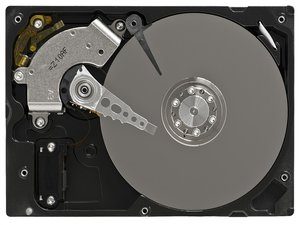 Rumors of the death of HDD technology have been greatly exaggerated. The advancement of solid state technology and its increasing rate of adoption has been largely responsible for this, but don’t count old school HDDs out just yet. They still have many important advantages, and recent breakthroughs should add further to the longevity of the tech.
 Here’s a statistic that is as disturbing as it is frustrating. According to the latest “State of the Internet/Security” report for the fourth quarter of 2017, as published by Akamai, bot-traffic accounts for a staggering 43 percent of all login attempts. As bad as that figure is on its face, it’s far worse for companies in the hospitality industry, where the figure is an almost unbelievable 82 percent.
 Sophos has released the results of their annual “State of Endpoint Security Today”, and it doesn’t paint a pretty picture. A full 54% of companies surveyed reported having been hit by a ransomware attack in 2017. Another 31% reported that they expect to be on the receiving end of such an attack in the near future.
 Oracle is currently the third-largest provider of POS (Point of Sale) software on the market today, which means that there’s a fairly good chance you’re using an Oracle POS system. If you are, there’s trouble ahead. A recently discovered security flaw could put your system at risk.
 Recently a critical flaw was found inside every Intel chip made during the last decade. The flaw makes two different exploits possible. These exploits have been dubbed “Meltdown” and “Spectre.”
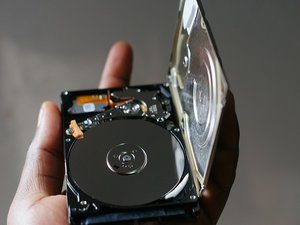 What’s an HDD manufacturer to do when faced with competition by faster, more efficient SSD drives?
 One of the greatest challenges among small business owners today is making the decision about IT support and maintenance of the information system; whether to hire an in-house IT tech or to outsource IT support for their business. With the relatively recent availability of Managed Services for small business, the list of choices – and decisions – has grown once again.
 The ransomware ecosystem is maturing. Strains are divided into “families” and the number of new families that have been discovered in 2017 is half what it was in 2016. Even so, the total number of attacks targeting businesses have risen by 26 percent over last year’s totals, according to the latest statistics released by Kaspersky Lab.

