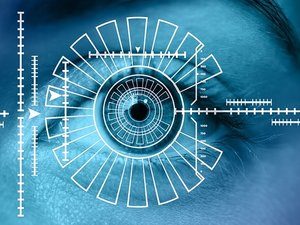
 According to a new report published by Spiceworks, nearly 90 percent of businesses will use some type of biometric technology for authentication by the year 2020. In fact, some 62 percent of companies already use biometrics in some form, with another 24 percent stating their intention to do so within the next two years.
The particulars break down like this:
57 percent of companies using biometric authentication use fingerprint scanners
14 percent use facial recognition
Five percent make use of hand geometry recognition
Three percent use iris scanners
Two percent use voice recognition
Two percent use palm-vein recognition
There are only a handful of companies that provide biometric solutions. Of those, Apple dominates the space, providing 34 percent of fingerprint scanning solutions and 14 percent of facial recognition solutions.
The rest of the market breaks out as follows:
Lenovo Fingerprint Manager is used by 13 percent of companies that utilize biometrics
Samsung fingerprint readers are used by 13 percent
Microsoft’s Windows Hello (face login) is used by 13 percent
Android’s Face Unlock is used by seven percent
As widespread as biometric adoption has been, only 10 percent of CIOs felt that biometric solutions were secure enough to be the sole means of authentication. IT security professionals have reached largely the same conclusion, with just 23 percent of them thinking that biometrics could replace traditional text-based passwords within the next two years.
The two biggest hurdles they see are the relative lack of transparency provided by biometric solutions providers about flaws and vulnerabilities discovered in their systems, and the lack of transparency around the biometric data collected by vendors.
Peter Tsai, a senior technology analyst at Spiceworks had this to say about the report: “Many IT professionals aren’t convinced biometrics can serve as a secure and reliable replacement for the standard username and password combo. Unless technology vendors can address the security issues and privacy concerns associated with biometrics, the technology will likely be used side-by-side in the workplace with traditional passwords or as a secondary authentication factor for the foreseeable future.”

President & CEO
I hope you enjoyed this article. My mission is to take your stress away from dealing with IT problems. Call (252) 565-1235 or send me a message at our contact us page if you have a question, comment or want help.
 Recently, another “exotic character” bug was found in iOS. If someone sends this particular character (a special character that’s part of the Indian language pack) to your phone via any messaging app, it will not only crash your phone, but cause a variety of messaging apps to stop functioning.
 Do you own a Mac? Do you use APFS “sparse disk images?” If so, be aware that under certain conditions, your trusty computer may allow you to copy important data into the void where it will be lost forever, without giving you a heads up first.
 Last year, Apple had to fix a “special character” bug in their Message app that was more of an annoyance than anything. This year, a new special character bug has been found, but this one is much more serious and could allow an attacker to crash your phone and block access to a variety of messaging apps.
 The latest Brand Finance Global 500 report out and contains some surprises this year.
 Recently, Apple found itself in hot water with its normally adoring user base. This happened when it became known that the company was intentionally throttling (slowing down) the speed of older iPhones.
 Recently, a group of investors wrote an open letter to Apple, urging the company to do more in regards to offering better and more robust parental controls on the devices the company makes. Although the group of investors control some $2 billion in Apple stock, this is a drop in the proverbial bucket, given the company’s $900 billion market cap. Nonetheless, the letter seems to have gotten Apple’s attention.
 Not long ago, observant Reddit users noted and began discussing a curious phenomenon. It appeared that older iPhones were unexpectedly slowing down, and no one could name the reason why.
 Apple has been quietly working on something called “Project Marzipan” for a couple of years now, and it appears that they’re getting closer to unveiling it.
 Phishing attacks just got a whole lot easier.