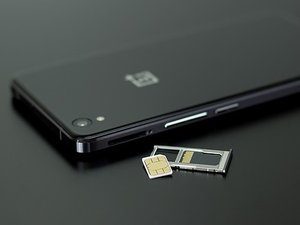
 SIM cards have long been a source of frustration for equipment manufacturers. With the relentless drive to produce smaller and smaller devices, the SIM card is a hurdle to be overcome. It’s relatively large, and when you account for the necessary housing, it becomes quite the design challenge.
That challenge seems to have been met, however. ARM, a prominent chip design firm, has recently announced the development of the iSIM. The iSIM is built into the processor, and according to the company, only takes up a fraction of a millimeter squared. To put that figure into context, today’s SIM cards measure 12.3 x 8.8mm, so ARM’s new design represents significant space savings indeed.
There’s a catch, though. Although the new design is ready, and is already in the hands of ARM’s business partners for evaluation, there’s no guarantee that cell phone providers will accept the new technology and incorporate them into the next generation of phones.
ARM doesn’t think this will be an issue, although phones weren’t at the forefront of the company’s mind when they developed the iSIM. Their main goal was to build the integrated SIMs to help power the next generation of tiny IoT devices, but this, ARM contends, is the very reason why phone carriers will welcome the new technology with open arms. After all, more devices connected to their respective networks means more opportunities to profit.
In any case, time will tell the tale. ARM is expecting that their business partners will readily embrace the new technology, and we should begin seeing products on the market utilizing the iSIM by the end of this year. This will be a fascinating innovation to watch. If it succeeds the way ARM hopes,, it will lead to the creation of a whole new generation of even smaller devices.

President & CEO
I hope you enjoyed this article. My mission is to take your stress away from dealing with IT problems. Call (252) 565-1235 or send me a message at our contact us page if you have a question, comment or want help.
 Recently, another “exotic character” bug was found in iOS. If someone sends this particular character (a special character that’s part of the Indian language pack) to your phone via any messaging app, it will not only crash your phone, but cause a variety of messaging apps to stop functioning.
 Do you own a Mac? Do you use APFS “sparse disk images?” If so, be aware that under certain conditions, your trusty computer may allow you to copy important data into the void where it will be lost forever, without giving you a heads up first.
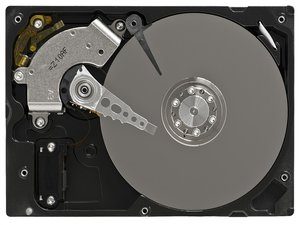 Rumors of the death of HDD technology have been greatly exaggerated. The advancement of solid state technology and its increasing rate of adoption has been largely responsible for this, but don’t count old school HDDs out just yet. They still have many important advantages, and recent breakthroughs should add further to the longevity of the tech.
 There’s a new strain of the “Rapid Ransomware” making the rounds, and because of how it’s being transmitted, it’s destined to have a higher than average rate of infection. The new strain was first discovered by Derek Knight. It is disturbing because it claims to come from the IRS, and will feature subject lines like “IRS Urgent Message-164.”
 Here’s a statistic that is as disturbing as it is frustrating. According to the latest “State of the Internet/Security” report for the fourth quarter of 2017, as published by Akamai, bot-traffic accounts for a staggering 43 percent of all login attempts. As bad as that figure is on its face, it’s far worse for companies in the hospitality industry, where the figure is an almost unbelievable 82 percent.
 Hackers are picky about their victims. They’ll target just about any group or organization, including the 2018 Olympics.
 Do you own a smart TV? More than half of all television sales in the US last year were smart TVs, so chances are decent that you own one. If you do, be aware that it may be collecting far more data about you than you think.
 Image theft is one of the biggest problems on the internet. If you’re a photographer, you’ve almost certainly lost money because people find your work online and make a copy of it rather than paying for the right to use it.
 The latest Brand Finance Global 500 report out and contains some surprises this year.