 Microsoft just made a big, significant purchase that has raised more than a few eyebrows. They just acquired GitHub for a hefty $7.5 billion.
What makes the purchase interesting and potentially troublesome is that Microsoft is the world’s largest proprietary software company, and GitHub is the world’s largest open source hosting service.
The natural question on everyone’s mind then, is what does this mean for open source? Is it doomed? Is it soon to go the way of the dinosaur, or will Microsoft hold the reins of power loosely and let open source continue to flourish?
Those are fair questions, especially given that GitHub is used by more than 28 million developers around the world, and is home to more than 85 million code repositories. In addition to that, the company was built on Git, which is an open source version control software written by Linus Torvalds (the creator of Linux). Its founders have worked hard to develop innovative workflows that have made the hub easy to use and work with.
The fear is that Microsoft will start strangling those developments and insist that GitHub begin using proprietary Microsoft products. While it’s too early to say for certain, the early indications are encouraging. Microsoft has stated that GitHub will be allowed to retain its status as an “open platform” and its service will continue to be offered for free.
Having said that, there will be some changes, including the fact that Microsoft will be offering integration between its AppCenter mobile testing service and projects hosted on GitHub. This builds on previous collaborations between Microsoft and GitHub. Last year, GitHub announced that they would support Microsoft’s “Git Virtual File System,” which the company designed for enterprise-sized data repositories.
The skeptics are right to be skeptical, but so far, the early indications are positive. Note that it’s not a done deal just yet. The merger is subject to regulatory approval in both the US and the EU.

President & CEO
I hope you enjoyed this article. My mission is to take your stress away from dealing with IT problems. Call (252) 565-1235 or send me a message at our contact us page if you have a question, comment or want help.
 Do you own a Surface Book 4? If you do, you may have been unfortunate enough to get one that suffers from a peculiar screen flickering issue. It’s not known exactly how many Surface Book 4’s have been affected by the issue, but thousands of angry users have been comparing horror stories about it on various discussion forums around the web.
 Apple’s Legions of users love FaceTime, but there’s a problem with the highly popular app. It only allows you to see and talk to one person at a time. Apple fans have been clamoring for Group FaceTime for almost as long as the app has existed, and soon, they’ll get their wish.
 It seems like a new attack vector emerges on a weekly basis, and this week is no exception. The latest threat: Emails containing specialized audio files whose acoustic vibrations can damage your computer’s hard drive. This is possibly damaging to the point of causing system failure, data corruption, and making it impossible to successfully reboot your machine.
 ZDNet Researcher Ryan Stevenson recently found a big problem on T-Mobile’s website regarding an unprotected API. As a result of the flaw, untold millions of T-Mobile’s customers’ account information was left exposed and completely unprotected. Literally anyone who stumbled across the site and tried to abuse it could access a wide range of customer information with no password required.
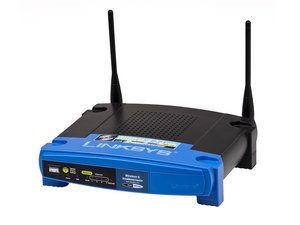 Cisco’s Talos Security Team has identified a new threat, and it’s a nasty one impacting more than half a million consumer-grade routers in the US. According to the Talos Team’s report, the new malware is impacting a broad cross-section of routers made by TP-Link, QNAP, Netgear, Mikrotik, and Linksys.
 Microsoft’s stock price is surging, putting the company’s total valuation at $753 billion. This makes it the third most valuable company on the planet, behind Amazon (782 billion), Apple ($923 billion) and leaving Google in fourth place, valued at $739 billion.
 If you use Apple products, you may have noticed an annoying “feature”. If you’re using the messaging app on your phone and texting someone and then you move to your Mac and access the same program there, the conversation you were having on your phone isn’t present. The two devices are messaging islands that can’t reliably communicate with each other. Since they can’t, you can’t start a conversation on one device and then pick it up later on another.
 Karanbir Singh (a program manager at Microsoft) is on a mission:
 Coca-Cola is the latest company to fall victim to a data breach. Unlike some of the others that have recently made headlines, however, this one was conducted from within.