Owners of Apple devices have a new attack vector to worry about, called “TrustJacking.” Symantec researchers recently stumbled across a pair of scenarios that take advantage of Wi-Fi syncing of various Apple devices. These are scenarios that also take advantage of the trust users have in the security of their own devices, allowing hackers to take complete control over those devices.
The flaw is a consequence of the way that iTunes Wi-Fi Sync is designed. The vulnerability manifests when a device is connected and the user selects the “sync” feature. This creates an opening which could potentially allow a hacker to take complete control over the device.
The first issue manifests like this: With the “sync” setting enabled, the device owner has access to both that device and a paired iPhone over a wireless connection, even after the device is disconnected from the syncing service. That sets up part one.
Part two of the first scenario requires a bit of social engineering, where a hacker tries to trick the device owner to click on a malicious link that will install malware of the hacker’s choosing on the vulnerable system.
The second part of the second scenario targets users who are traveling. A hacker could take control of a free airport charging station. In order to make use of those free charging stations, users are required to trust the device. As soon as that happens, the hacker controlling the charging station can remotely issue a command to connect to iTunes, and then enable the sync command.
Once those two steps are completed, even when the victim disconnects from the charging station, the hacker can still access the compromised device remotely, gaining access to most (if not all) of the user’s private information.
Unlike similar, recently discovered vulnerabilities in Apple products, this one distinguishes itself by allowing the hacker permanent access to the device, making it a dangerous vulnerability indeed.

President & CEO
I hope you enjoyed this article. My mission is to take your stress away from dealing with IT problems. Call (252) 565-1235 or send me a message at our contact us page if you have a question, comment or want help.
 Atlanta-based SunTrust Bank is the 12th largest bank in the US. They have a major problem, and so do roughly a million and a half of its customers. According to CEO William Rogers, an unidentified employee of the firm printed a vast amount of private customer information, including their names, addresses, phone numbers and account balance information.
 Do you do your banking online? If so, there’s bad news in the form of a report recently released by the security firm “Positive Technologies.”
 Another week, another high-profile data breach. This time, it’s Under Armour in the hot seat. Under Armour acquired the MyFitnessPal app back in February 2015, and the company recently announced that their new acquisition was hacked in late February 2018.
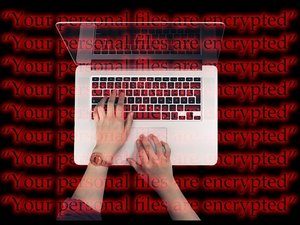 If you post ads on Craigslist for short term employment, be aware that there’s a new malspam campaign that aims to distribute Sigma ransomware on the computers of unwary users.
 It looks like it’s going to be another bad month for Equifax. The company just can’t seem to get out of its own way.
 Do you have a Mi-Cam in your home? Even if you don’t have kids, you may have one. They’re a highly popular, inexpensive means of keeping tabs on the comings and goings inside your home when you’re not around.
 There’s a new strain of the “Rapid Ransomware” making the rounds, and because of how it’s being transmitted, it’s destined to have a higher than average rate of infection. The new strain was first discovered by Derek Knight. It is disturbing because it claims to come from the IRS, and will feature subject lines like “IRS Urgent Message-164.”
 Menlo Security just released their third annual “State of the Web” report and it’s not pretty. The headline finding is that 42% of the top 100,000 sites as ranked by Alexa are more dangerous than you think.
 The ThreatMetrix Cybercrime Report 2017 is out, and is a troubling read for anyone who has anything to do with data security. As a fraud prevention company protecting nearly a billion and a half users around the world, they’re uniquely positioned to know, and their insights on the threat landscape is invaluable.