 Twitter has long had a reputation for being at the mercy of bots that have been used to sway public discourse and opinion.
Often, these bots are controlled via Twitter API apps that allow the authors to automate most of their actions, such as tweets, follows, and likes.
In the face of Facebook’s recent grilling before congress, Twitter has decided to take a more proactive stance, and has recently announced major changes to their policies.
The first part of the company’s statement to that effect reads as follows:
“Starting today, all new requests for access to Twitter’s standard and premium APIs are required to go through a new individual approval process.”
In addition to the newly announced approval process, the company moved decisively to cut off more than 143,000 apps they deemed to be in violation of the company’s terms of service.
The more robust approval process requires app developers to provide more information about themselves and the ultimate purpose of the apps they design. Additionally, Twitter has put a hard cap on the number of apps that developers can create and manage, which tops out at ten. If developers need to run more than that, they’ll need special permission from Twitter, and they’ll have to provide a compelling reason to justify the need.
Beginning September 10th, 2018, the company will be placing additional restrictions on every Twitter App which will control their use rates.
The new rate limits (per app) will be:
300 Tweets and Retweets per hour
1,000 likes per 24 hours
1,000 follows per 24 hours
15,000 direct messages per 24 hours
The company reserves the right to either remove or further restrict these limits for legitimate reasons.
On top of all that, Twitter has also modified its Twitter API support page to include an option for reporting “bad apps” that break one of the company’s policies. According to the company, the combined effect of all of these changes should “help cut down on the ability of bad actors to create spam on Twitter via their APIs.”
While it remains to be seen how effective these changes will be, kudos to Twitter for taking action.

President & CEO
I hope you enjoyed this article. My mission is to take your stress away from dealing with IT problems. Call (252) 565-1235 or send me a message at our contact us page if you have a question, comment or want help.
 If you’ve used Windows 10 for any length of time, you’ve probably had this happen to you. You’re right in the middle of working on something important, and all of a sudden, your OS decides it would be a great time to install some updates!
 Mimecast’s 2018 “State of Email Security” report is out, and although it’s contents are hardly a surprise, the news it contains is mostly bad.
 There is a small but significant change from Google, with the release of Chrome 68. The updated browser will now prominently notify browsers when they surf their way to non-HTTPS websites, displaying them as “Not Secure.”
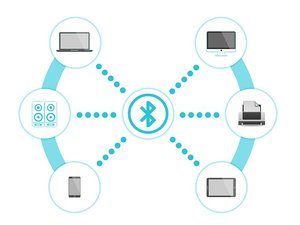 There’s a new Bluetooth security vulnerability to be aware of, tracked as CVE-2018-5383, and it’s a nasty one.
 The girl scouts have officially moved into the 21st century.
 If you’re like most people, you probably rely heavily on the GPS function of your phone. Type in an address and your phone helpfully guides you, turn by turn, to your destination. It’s one of the most often utilized features of a smartphone, and of course, the hackers are very interested in interfering with it.
 Positive Technologies has just released a new report that paints a grim picture for IT professionals. If your sense is that the number of cyberattacks are increasing, you’re not wrong. In fact, it’s probably worse than you realize.
 A majority of business owners from around the world (68 percent) feel that they’re better prepared to ward off a cyberattack and prevent a data breach than their competitors. This is a figure which is up 8 percent over last year’s statistic for the same question. This, according to a recent survey by FICO.
 According to the Kremlin, Russia prevented almost twenty five million cyber-attacks during the World Cup this year.