 Hulu recently announced that it would join both Netflix and Amazon Prime in allowing its users to download content to watch offline, but in Hulu’s case, it comes with a twist.
If you subscribe to the $7.99 a month tier, in addition to downloading the content you want to watch, you’ll also be downloading the advertising associated with that content. It’s an important distinction because Hulu is structured quite differently from Netflix and Amazon Prime.
Much of Hulu’s programming is available on regular network television, and often airs the same day it does on the regular networks. Consequently, ads on Hulu tend to command more of a premium than ads on the other two companies.
Combine that with the fact that Hulu gets most of its revenue from advertising, and you begin to see the appeal and the necessity of such a strategy from Hulu’s perspective. Netflix and Amazon prime both have a deep bench of their own, unique programming which acts as a draw. However, Hulu is currently dependent on content licensed from others, which is why ad revenue is of utmost importance to them.
It should be noted that if you subscribe to the company’s $11.99/month plan, you can download ad-free content.
Either way, the ability to watch content offline is a big deal. This is especially important to frequent travelers who often find themselves in places with patchy internet service, or no connectivity at all. In those cases, having access to offline content can be a real godsend that can mean the difference between a tolerable trip and a miserable one.
Kudos to Hulu for joining the ranks of Amazon and Netflix, and although there have been a few grumblings about having to endure ads, it really is a small price to pay for the flexibility and convenience.

President & CEO
I hope you enjoyed this article. My mission is to take your stress away from dealing with IT problems. Call (252) 565-1235 or send me a message at our contact us page if you have a question, comment or want help.
 In terms of toys, what could possibly be better than LEGOS? How about LEGOS, combined with Alexa? That’s the latest idea from Amazon, who has paired the unlikely duo in a newly announced service called “LEGO Duplo Stories.” The new service (“skill,” in the parlance of Alexa) will be available on any device that offers Alexa support including Echo Dot and Amazon Echo. It provides a selection of stories with audio prompts that guide children in the construction of something with their LEGO Duplos that ties in with the story being told.
 Before Google released its Chrome browser, Firefox felt pretty good about their arrangement. They got a handsome reward in exchange for making Google.com their default search engine. It was a win-win.
 Microsoft has been having some “issues” of late. It’s April Windows 10 rollout had to be delayed on account of some mysterious BSOD (“Blue Screen of Death”) issues. This month’s rollout is plagued by similar problems, trading the BSOD issues for problems with both “Hey Cortana” and Google’s Chrome browser.
 The Department of Health and Human services has issued a warning to healthcare providers to be on high alert for the SamSam strain of ransomware, which has been used to attack eight different health care entities so far this year.
 Twitter shot itself in the foot recently but is working hard to get out in front of the problem. According to a recent blog post, the company experienced an issue with its hashing routine – a process which masks user passwords, making them virtually impossible to crack.
 The on-again, off-again talks about a merger between T-Mobile and Sprint is definitely back on, with T-Mobile planning to buy Sprint for a staggering $26 billion.
 Thanks to researchers Daan Keuper and Thijs Alkemade (who work at the Dutch cyber-security firm Computest), newly produced Golf GTE and Audi A3 vehicles are a little bit safer, and a lot less vulnerable to remote hacks.
 Score one for the good guys, but with hesitation. Unfortunately, in today’s fast-moving digital world, even a victory doesn’t mean the end of a problem.
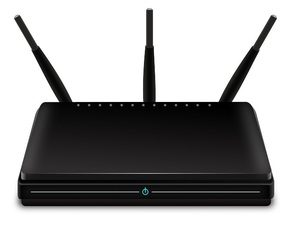 After more than two decades in the business, Apple is officially going to stop selling routers. The writing has been on the wall for a while now, since the company’s “AirPort” family of products hasn’t received a significant update in more than five years.