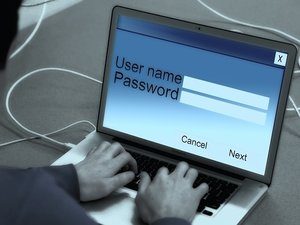
 Karanbir Singh (a program manager at Microsoft) is on a mission:
Kill the password.
As he said in a recent blog post:
“Nobody likes passwords. They are inconvenient, insecure, and expensive. In fact, we dislike them so much that we’ve been busy at work trying to create a world without them–a world without passwords.”
The company’s stated goal is to make it possible that an end user will never have to bother with passwords on a day to day basis and would instead provide credentials that are virtually impossible for hackers to crack or breach.
To accomplish this goal, the company is looking at a number of options, including biometrics and multi-factor authentication schemes.
Singh notes that this isn’t just blue-sky thinking, either. Already, more than 47 million users and more than five thousand businesses are utilizing “Windows Hello for Business.” Another solution currently in use is the Microsoft Authenticator app, which allows users to access their Microsoft accounts via their smartphones.
Additionally, as part of the Windows 10 update issued in April (2018), any user with a Managed Service Account or Azure Active Directory can now access their Windows 10 PC without having to enter their password, via the authenticator app and Windows Hello (provided that S-mode is enabled).
The company is also taking advantage of the newly ratified Fast Identity Online (FIDO2) security protocol, and is in the process of updating Windows Hello to enable secure authentication across a wider range of scenarios. For example: The company is currently working on a proof of concept for shared PCs that will allow users to log on via FIDO2 security keys, which will allow employees to carry their credentials with them.
They envision a scenario in which any user can simply walk up to any device the organization controls and authenticate without ever having to enter their username or password. This would be especially useful for analysts, help desk personnel, and anyone working in the medical profession.
Obviously no firm time-frames have been given, but as mentioned, some of these technologies are already in use and will be refined in the months ahead.

President & CEO
I hope you enjoyed this article. My mission is to take your stress away from dealing with IT problems. Call (252) 565-1235 or send me a message at our contact us page if you have a question, comment or want help.
 Coca-Cola is the latest company to fall victim to a data breach. Unlike some of the others that have recently made headlines, however, this one was conducted from within.
 If you’ve been considering swapping out some of your old HDDs to SSDs, now is a great time to do so, thanks to the convergence of two factors.
 The news just keeps getting worse for Equifax. The company has already had to revise their estimates of how many people were impacted by last year’s breach more than once, and now, they’re having to revise their estimate yet again. This latest revision comes after company officials had to testify before Congress, which has been formally investigating the matter.
 Security researchers at the Electronic Frontier Foundation (EFF) have discovered a dangerous new email vulnerability called “Efail.” Exploiting this new email vulnerability would allow hackers to decrypt emails encrypted with either PGP or S/MIME – including emails that were sent several years earlier. Both of these encryption tools are commonly used by politicians, journalists and other professionals who need a secure means of electronic communication. Since the standards are so well established, they’re used widely and regarded as fool-proof. Sadly, that’s no longer the case.
 Big changes are in the works in the SSD-based storage ecosystem. It includes three different vendors all making similar announcements regarding designs to help companies that rely on SSD-based storage systems to reduce duplication and control data creep.
 Brinker International (the parent company of the Chili’s restaurant chain) formally announced that on May 11, they discovered malware on an undisclosed number of their point of sales terminals. Details are sketchy at this point, because the investigation is still ongoing, but the company had the following to say about the incident:
 An identity threat company called 4iQ has recently published a report called “Identities in the Wild: The Tsunami of Breached Identities Continues.” Unfortunately, the information in the report contains all bad news. Some of the details are simply confirmations of things we already knew, and some are shocking statistics that will leave you feeling dismayed.
 There’s a new security threat to be worried about, and security professionals are warning that it could be very bad indeed. The new malware is known as the “Vega Stealer,” and is currently being used in a relatively simplistic phishing campaign designed to harvest financial data that has been saved in both Google Chrome and Firefox browsers. Unfortunately, based on an analysis of the code, it could be a much more serious threat.
 Depending on which side of the privacy debate you’re on, you’re either going to love or hate this announcement: