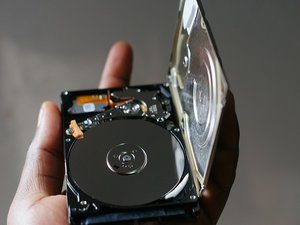
 What’s an HDD manufacturer to do when faced with competition by faster, more efficient SSD drives?
Go big, and go faster. At least that’s the strategy that both Seagate and Western Digital are adopting.
SSDs tend to get prohibitively expensive as their size crosses the 1TB threshold, which creates an opportunity for HDD manufacturers. Seagate is currently selling drives with an impressive 14TB of capacity, and has plans on the drawing board to introduce a 40TB drive by 2023, with Western Digital not far behind, aiming for a 40TB drive by 2025.
That’s impressive, but as Seagate mentioned in a recent blog post:
“Capacity is only half of the solution. If the ability to rapidly access data doesn’t keep pace with all that capacity, the value potential of data is inhibited. Therefore, the advancement of digital storage requires both elements: increased capacity and increased performance.”
In order to address the performance side of the equation, Seagate is experimenting with a new approach called “multi-actuator technology.”
HDDS are based on platters, with an actuator arm on the top and bottom that write to the platters.
Actuators are all aligned and are designed to move in tandem, but at any given moment, only one arm is writing to the disk.
Seagate’s new solution utilizes two sets of actuator arms, each controlled independent of the other. With two heads capable of reading and writing simultaneously, HDD speeds can effectively be doubled.
It’s an idea that has been around for a while, but until recently, thanks to the prohibitive cost of the components, it was simply impractical. With component prices falling, it’s suddenly viable. The combination of massive HDDs and the new technology are making people take a second look at HDD technology.
This is a great advance that breathes new life into HDDs, and is a truly exciting innovation.

President & CEO
I hope you enjoyed this article. My mission is to take your stress away from dealing with IT problems. Call (252) 565-1235 or send me a message at our contact us page if you have a question, comment or want help.
 Recently, a group of investors wrote an open letter to Apple, urging the company to do more in regards to offering better and more robust parental controls on the devices the company makes. Although the group of investors control some $2 billion in Apple stock, this is a drop in the proverbial bucket, given the company’s $900 billion market cap. Nonetheless, the letter seems to have gotten Apple’s attention.
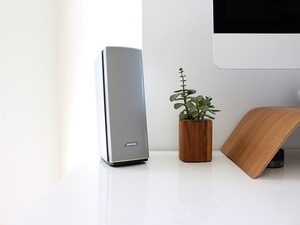 Have you been hearing strange, otherworldly sounds on your Bose or Sonos speakers? If so, rest assured that your speakers aren’t haunted. They’ve likely been hijacked by hackers.
 Another week, another attack vector, and this one deserves extra points for creativity.
 One of the greatest challenges among small business owners today is making the decision about IT support and maintenance of the information system; whether to hire an in-house IT tech or to outsource IT support for their business. With the relatively recent availability of Managed Services for small business, the list of choices – and decisions – has grown once again.
 Facebook scams are fairly common occurrences, owing to the sheer size of the platform’s user base. It’s no surprise that there’s a new one making the rounds that you should be aware of.
 Not long ago, observant Reddit users noted and began discussing a curious phenomenon. It appeared that older iPhones were unexpectedly slowing down, and no one could name the reason why.
 SplashData has released their latest annual report on the most commonly used passwords. Unfortunately, the more things change, the more they stay the same.
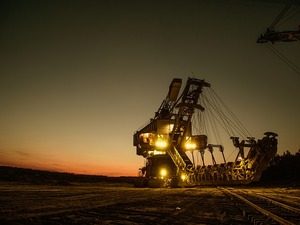 In the malware ecosystem, few strains are more terrifying than those that target industrial control systems. Think Stuxnet, Industroyer and IronGate. Recently, security researchers from FireEye have identified a new threat in this class of malware. Alternately called “Triton” or “TRISIS,” this new code targets Triconex Safety Instrumented Systems (SIS) controllers, which are manufactured by Schneider Electric. These control systems are found in a wide range of industrial equipment. They are, in effect, the gears that keep the machine of modern industry moving.
 Security researchers at UpGuard recently made a terrifying discovery in finding an unprotected Amazon S3 server containing several databases belonging to a data analytics provider called Alteryx.