 If you’re in the market for a new laptop but can milk a little more life out of the one you’ve got, 2019 will be the year to buy. The reason? 5G. AT&T is slated to become the first carrier to offer 5G network connectivity to small segments of its customer base this year (starting in Atlanta, Dallas, and Waco, and then slowly spreading to other areas).
While they’ll be the first, it’s not hard to imagine that their competitors will be hot on their heels, and all the major PC and laptop manufacturers are keenly aware of this. That’s why Microsoft, Lenovo, HP, Dell, and Intel have all announced that the first 5G-enabled PCs will become available sometime in mid to late 2019, in a bid to take advantage of the awesome new capabilities that 5G promises to make a reality.
While Intel missed the 4G opportunity, the company has every intention of being front and center in the 5G revolution.
In fact, the company had this to say when it made its announcement earlier this week:
“Intel is investing deeply across its wireless portfolio and partners to bring 5G-connected mobile PCs to market, with benefits for users like high quality video on-the-go, high-end gaming, and seamless connections as users traverse WiFi and Cellular networks.”
All true, and a widespread 5G network would truly be a game changer. The problem though, is that 5G has a bit of an image problem. It has long been considered the Holy Grail of wireless networking, and Intel and other companies have been hyping its many advantages for years.
The difference of course is that now, companies have the technical capabilities to make it all real, and have firm timetables in place for a rollout, neither of which were true in the past. Even so, 5G now has to swim against a bit of a tide of its own making as it draws closer to becoming reality.th permission from Article Aggregator

President & CEO
I hope you enjoyed this article. My mission is to take your stress away from dealing with IT problems. Call (252) 565-1235 or send me a message at our contact us page if you have a question, comment or want help.
 Depending on who you ask, Google’s Project Zero is either the thing that’s going to singlehandedly save the internet, or the bane of many companies’ existence. It’s easy to see both sides of the argument.
 AT&T has big plans for their future and yours. If they’re your carrier of choice, and if you live in the cities of Dallas, Atlanta, or Waco, then you stand to be on the cutting edge of the changes the company has in store. Those locations have been selected to be the first to receive AT&T’s 5G network upgrade.
 Android users have a reason to cheer. According to the latest report by ESET, the number of ransomware attacks targeting Android devices declined in 2017. The decline represents a bit of an anomaly, given that in 2017, the most common type of malware attack (by a wide margin) was ransomware. Given that security researchers can’t name a particular reason for the decline, it’s important not to read too much into the data. Whether there are declining figures or not, ransomware attacks still played a prominent role in last year’s threat landscape across a whole spectrum of devices. This year is shaping up to be no different.
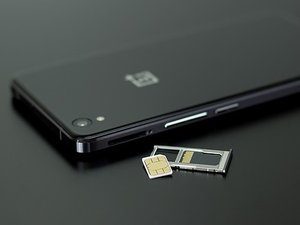 SIM cards have long been a source of frustration for equipment manufacturers. With the relentless drive to produce smaller and smaller devices, the SIM card is a hurdle to be overcome. It’s relatively large, and when you account for the necessary housing, it becomes quite the design challenge.
 Recently, another “exotic character” bug was found in iOS. If someone sends this particular character (a special character that’s part of the Indian language pack) to your phone via any messaging app, it will not only crash your phone, but cause a variety of messaging apps to stop functioning.
 Do you own a Mac? Do you use APFS “sparse disk images?” If so, be aware that under certain conditions, your trusty computer may allow you to copy important data into the void where it will be lost forever, without giving you a heads up first.
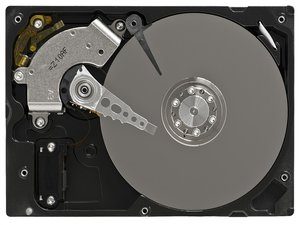 Rumors of the death of HDD technology have been greatly exaggerated. The advancement of solid state technology and its increasing rate of adoption has been largely responsible for this, but don’t count old school HDDs out just yet. They still have many important advantages, and recent breakthroughs should add further to the longevity of the tech.
 There’s a new strain of the “Rapid Ransomware” making the rounds, and because of how it’s being transmitted, it’s destined to have a higher than average rate of infection. The new strain was first discovered by Derek Knight. It is disturbing because it claims to come from the IRS, and will feature subject lines like “IRS Urgent Message-164.”
 Here’s a statistic that is as disturbing as it is frustrating. According to the latest “State of the Internet/Security” report for the fourth quarter of 2017, as published by Akamai, bot-traffic accounts for a staggering 43 percent of all login attempts. As bad as that figure is on its face, it’s far worse for companies in the hospitality industry, where the figure is an almost unbelievable 82 percent.