Google is taking yet another important step to help save us from ourselves. The company is releasing a complete redesign of their Chrome browser, which is exciting. There’s one feature in particular, however, that bears taking a special look at.
 Perhaps the most significant change to the browser is the addition of a new password manager, which will offer to generate a random password when you sign into a website for the first time. The randomly generated password will be securely tucked away inside your Google Account and synced across both desktop and mobile versions of Chrome.
Password security is something humans aren’t very good at. Despite the risks and the repeated dire warnings, many people still have the tendency to use the same passwords that are only marginally different, across multiple websites they have accounts on.
The problem is that if one of the websites you have an account on is breached, it puts most (if not all) of your other web accounts at risk. It’s an extremely bad habit from a security standpoint, and unfortunately, it is one that has proved to be notoriously difficult to break.
Google’s solution to the problem is interesting,T but it should be noted that it is far from all-inclusive. Bear in mind that Chrome only manages passwords inside the browser, so if you log into services like Netflix on your smart TV, those login details won’t be captured in, or stored by your Google Account.
Google isn’t the only company doing what it can to save us from our worst password impulses. Apple is making changes too. With the release of iOS 12, Apple will give its OS the ability to autofill passwords across browsers and apps from third-party password managers.

President & CEO
I hope you enjoyed this article. My mission is to take your stress away from dealing with IT problems. Call (252) 565-1235 or send me a message at our contact us page if you have a question, comment or want help.
 If you fly Air Canada and use their mobile app, it may be time to change your password. The company recently announced that between August 22nd and August 24th of this year, they detected “unusual log-in behavior,” and that a small fraction (some 20,000) of their 1.7 mobile app users may have had their data compromised as a result.
 Tech Support scams are nothing new, but they are getting increasingly sophisticated. Worse, tech giants like Google are finding it notoriously difficult to detect them.
 Researchers operating out of the University of Florida, Stony Brook University and Samsung Research America have made a disturbing discovery. Millions of Android smartphones manufactured by eleven different OEMs (Original Equipment Manufacturers) were found to be vulnerable to attack via AT Commands.
 Telecommunications giant T-Mobile is the latest victim of a large-scale data breach, with personal data belonging to more than two million of its customers having been leaked. The exposed information included customer name, phone number, email address, billing zip code, account number and whether the account was pre-paid or post-paid.
 Android users have a new threat to contend with, according to a sixteen-page whitepaper outlining a new malware strain.
 According to a recent survey conducted by Pew Research Center, 54 percent of teens say that they spend too much time on their cellphones.
 Earlier this year, Microsoft announced that it had entered into a partnership with Open Whisper Systems, the makers of the Signal app. The purpose of the partnership was to bring Signal’s open source, end-to-end encryption protocol to Skype.
 According to Google’s support page on the matter, disabling your phone’s “Location History” in your phone’s privacy settings will prevent Google from tracking every move you make.
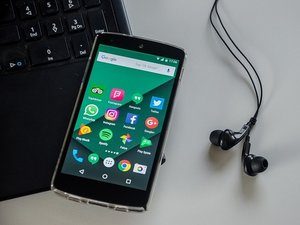 Android 9 is finally here, at least for some users. As of today, if you have any of the following phones, you can get the latest update: