Google is taking yet another important step to help save us from ourselves. The company is releasing a complete redesign of their Chrome browser, which is exciting. There’s one feature in particular, however, that bears taking a special look at.
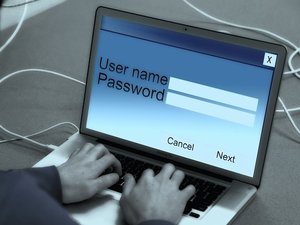 Perhaps the most significant change to the browser is the addition of a new password manager, which will offer to generate a random password when you sign into a website for the first time. The randomly generated password will be securely tucked away inside your Google Account and synced across both desktop and mobile versions of Chrome.
Password security is something humans aren’t very good at. Despite the risks and the repeated dire warnings, many people still have the tendency to use the same passwords that are only marginally different, across multiple websites they have accounts on.
The problem is that if one of the websites you have an account on is breached, it puts most (if not all) of your other web accounts at risk. It’s an extremely bad habit from a security standpoint, and unfortunately, it is one that has proved to be notoriously difficult to break.
Google’s solution to the problem is interesting,T but it should be noted that it is far from all-inclusive. Bear in mind that Chrome only manages passwords inside the browser, so if you log into services like Netflix on your smart TV, those login details won’t be captured in, or stored by your Google Account.
Google isn’t the only company doing what it can to save us from our worst password impulses. Apple is making changes too. With the release of iOS 12, Apple will give its OS the ability to autofill passwords across browsers and apps from third-party password managers.

President & CEO
I hope you enjoyed this article. My mission is to take your stress away from dealing with IT problems. Call (252) 565-1235 or send me a message at our contact us page if you have a question, comment or want help.
 The Internet on devices continues to be a major problem when it comes to security. Unfortunately, a big part of the reason why comes down to end users. Recently, Bitdefender released a new report entitled “The IoT Threat Landscape And Top Smart Home Vulnerabilities in 2018,” and it paints a grim picture indeed.
 Do you use the Chrome browser extension for the MEGA file storage service? If you do, please read this article carefully. The official extension for that service has been compromised. It has been replaced with a malware version that has the capability to steal user login data for a number of popular websites, including Github, Google, Amazon, Microsoft and more.
 In 2016, an unnamed US energy company left some 30,000 records (containing information about its security assets) exposed for more than two months (a total of 70 days), in violation of energy sector cyber security regulations. When the incident was initially reported, the name of the company was withheld.
 If you fly Air Canada and use their mobile app, it may be time to change your password. The company recently announced that between August 22nd and August 24th of this year, they detected “unusual log-in behavior,” and that a small fraction (some 20,000) of their 1.7 mobile app users may have had their data compromised as a result.
 Tech Support scams are nothing new, but they are getting increasingly sophisticated. Worse, tech giants like Google are finding it notoriously difficult to detect them.
 Business Email Compromise (BEC) attacks are a major threat, costing business nearly three billion dollars a year.
 2017 was “The Year of Ransomware.” It saw an incredible number of ransomware attacks and infections, paired with a tremendous number of innovations.
 Researchers operating out of the University of Florida, Stony Brook University and Samsung Research America have made a disturbing discovery. Millions of Android smartphones manufactured by eleven different OEMs (Original Equipment Manufacturers) were found to be vulnerable to attack via AT Commands.
 There’s a new threat to point of sale (POS) systems coming out of Russia, according to security researchers from Booz Allen Hamilton. The malware, which they’re calling “RtPOS” isn’t bleeding edge technology, and does not approach the level of sophistication of other recently discovered strains, but that doesn’t mean it should be taken lightly. These strains include RawPOS, MajikPOS, UDPOS, and Treasure hunter.