 Most people agree that the use of USB drives increases efficiency and boosts productivity, which goes a long way toward explaining their popularity, but these handy little drives can also be problematic.
According to a recently published survey by Apricorn, 87 percent of employees surveyed report that they have lost or had a USB drive stolen and failed to notify their employer. Worse, 80 percent of employees surveyed reported using non-encrypted USB drives that they’ve often acquired for free at trade shows or conferences.
The fact that these drives are unencrypted is bad enough, but there’s another, even more, frightening dimension to the problem. Such drives could be pre-loaded with malware, which could easily make it onto your company’s network the moment they’re connected to any office machine.
Apricorn had this to say about the results of the survey:
“With the ever-increasing amount of data breaches and compromises, companies need to carefully monitor what data is being created in their organizations, and what is leaving.
A government, healthcare, finance, and education industries have access to copious amounts of sensitive information and most of these industries are using USBs without advanced permission. Not only are these companies leaving themselves vulnerable, they are placing their customers’ and employees’ data at risk.”
Although the company notes that there is an awareness of the damage that lost or compromised data can cause, not much is being done about preventing that loss, at least where the use of USB drives is concerned. According to the survey, fully half of the respondents indicated that they didn’t need to seek permission to use a USB drive to copy or transport potentially sensitive information.
Does your company have a robust set of policies in place to control the use of USB drives? Are all the USBs used by your employees encrypted and secure? Do you have a policy in place regarding proper reporting procedures should a USB drive go missing? Important questions, all.

President & CEO
I hope you enjoyed this article. My mission is to take your stress away from dealing with IT problems. Call (252) 565-1235 or send me a message at our contact us page if you have a question, comment or want help.
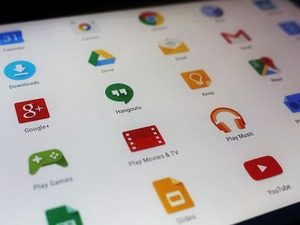 How many apps do you have on your smartphone? Do you know how much data they’re collecting about you?
 HP is in the news again. If you missed the initial story, earlier in the year, it was reported that an audio driver that came pre-installed on a number of HP laptops contained keylogging code that stored every keystroke made by the person using the machine to a human-readable file. Once discovered, HP issued a patch that removed the keylogging function and deleted the data file.
 Researchers from the security firm 4iQ have made a disturbing discovery on the dark web. A massive repository has been discovered that contains a staggering 1.4 billion usernames and passwords in plain text.
 Phishing attacks just got a whole lot easier.
 Researchers at Malwarebytes have discovered a new exploit that allows malicious website owners to use your PC to mine various forms of cryptocurrency, even if you exit the browser window the malicious site was displayed on.
 Intel is catching some flak for releasing CPU technology that’s filled with security flaws. At issue is Intel’s Management Engine (ME), which is designed for Enterprise use and is of no real value on equipment designed for personal or home use.
 The ransomware ecosystem is maturing. Strains are divided into “families” and the number of new families that have been discovered in 2017 is half what it was in 2016. Even so, the total number of attacks targeting businesses have risen by 26 percent over last year’s totals, according to the latest statistics released by Kaspersky Lab.
 Do you own a Mac? Is it running Apple’s latest macOS, the “High Sierra?” If so, be extra careful with who you allow access to your machine.
 Do you use the image hosting service, Imgur? If you do, there’s a slight chance that you’ll be prompted to change your password the next time you log on. That’s because the company’s servers were breached in 2014, and the hackers made off with 1.7 million usernames and passwords, which represents just a tiny fraction of the company’s 150 million users.