 Researchers at the University of Washington just might change the face of computers and computing forever. It may seem like the stuff of science fiction, but based on their research, the day may soon be coming when computing devices are completely un-tethered, requiring no wires for either power or recharging.
The team was able to successfully charge a smartphone from across a room using nothing more than lasers. Right now, their approach has an effective range of about forty feet. Devices are detected by way of acoustic “chirps” which occur below the threshold of human hearing. Once a target device is located, the laser charging system sends power to them using laser light, with no damage to the target device.
Right now, the power transfer is limited to just a couple of watts. However, the researchers don’t see any obstacles that would prevent scaling of the power transfer, meaning it could easily be modified to power PCs.
Wireless Power Transfer (WPT) is not a new idea. In fact, it’s in use today in such things as smartphones and electric toothbrushes. The problem, at least until now, has been a matter of range, which has been virtually nonexistent until the University’s game-changing experiments.
The big breakthrough wasn’t in sending power to a device via laser. Scientists have known that was possible for quite some time. The issue though, was that when lasers (or microwaves) were used to send power, they were invariably hazardous to humans in the area. In addition, they often fried the electronics they were attempting to power. The research team seems to have solved for both of those problems.
While the technology is still quite some distance from being commercially available, this is a huge leap forward. This could forever change the way we interact with our computing devices, and that change could come much sooner than anyone ever imagined.

President & CEO
I hope you enjoyed this article. My mission is to take your stress away from dealing with IT problems. Call (252) 565-1235 or send me a message at our contact us page if you have a question, comment or want help.
 Atlanta-based SunTrust Bank is the 12th largest bank in the US. They have a major problem, and so do roughly a million and a half of its customers. According to CEO William Rogers, an unidentified employee of the firm printed a vast amount of private customer information, including their names, addresses, phone numbers and account balance information.
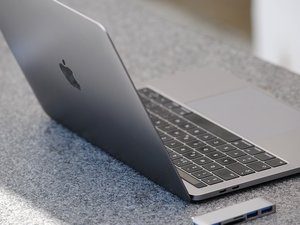 If you recently bought a 13-inch MacBook Pro (without a Touch Bar), you’ll want to head to Apple’s website. The company didn’t make a big announcement, but they’ve quietly introduced a battery replacement program that impacted what the company described as a “limited number” of laptops.
 Do you do your banking online? If so, there’s bad news in the form of a report recently released by the security firm “Positive Technologies.”
 Score one for the good guys. A researcher from BrilliantIT was recently able to figure out how infected computers would connect to EITest’s command and control server, and using that information, was able to bring down their entire network.
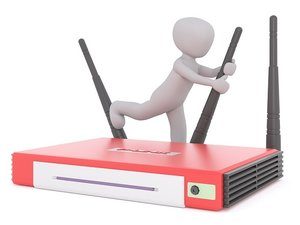 Beware of compromised routers spreading malware. This is according to both Kaspersky Labs and a recently released government report.
 Panera Bread company is the latest to find itself in hot water. Recently, security researcher Dylan Houlihan discovered that the company had failed to encrypt (or otherwise protect) a file containing usernames, email addresses, physical addresses, phone numbers and loyalty account numbers for a staggering thirty-seven million of its customers.
 The bad news just doesn’t seem to stop where Intel and the Speectre vulnerability are concerned. The latest bit of news comes directly from Intel, as the company admits that it’s just not possible to address the Spectre vulnerability in some of its older hardware. This means that nine families of chips and more than 230 models of computers (mostly manufactured between 2007 and 2011) will remain vulnerable to Spectre forever.
 Microsoft recently made small but significant changes to its Office 365 subscription service and to OneDrive, which are often used in tandem. The goal is to make it easier for users whose files have been encrypted by ransomware (or otherwise corrupted) to recover them.
 Congratulations to Adobe Flash Player for not being the software most targeted by hackers. Security vendor “Recorded Future” has just published their annual list of the software hackers most commonly focus on when targeting computers and handheld devices for attack.