 Coca-Cola is the latest company to fall victim to a data breach. Unlike some of the others that have recently made headlines, however, this one was conducted from within.
In September 2017, an employee at one of the company’s subsidiaries stole an external hard drive containing personal data belonging to more than 8,000 company employees. Law enforcement officials notified the company when the drive was confiscated, but urged them not to make a public announcement regarding the incident until their investigation had been concluded.
Coca-Cola complied with this request, which is why we’re only hearing about it now. Once the company got the green light from law enforcement, they notified all impacted personnel via a letter, which included::
“Our investigation identified documents containing certain personal information for Coca-Cola employees and other individuals that was contained in the data held by the former employee. We do not have any information to suggest that the misappropriated information was used to commit identity theft.”
As is becoming standard practice in the aftermath of such incidents, the company also announced that it would offer one free year of identity monitoring to the people impacted by the breach.
This latest announcement serves to drive home one of the main points made in a recently conducted survey, “The Global State of Information Security Survey 2018,” which concluded that insider threats are one of business’ top security concerns.
This breach is significantly smaller in both scope and scale than some of the others we’ve seen so far this year. However, the company is still suffering backlash, which has impacted both the trust of its employees and the company’s stock price. As of now, the company’s stock price is down nearly 4 percent over the last three months, with additional losses likely in the near term.

President & CEO
I hope you enjoyed this article. My mission is to take your stress away from dealing with IT problems. Call (252) 565-1235 or send me a message at our contact us page if you have a question, comment or want help.
 If you’ve been considering swapping out some of your old HDDs to SSDs, now is a great time to do so, thanks to the convergence of two factors.
 The news just keeps getting worse for Equifax. The company has already had to revise their estimates of how many people were impacted by last year’s breach more than once, and now, they’re having to revise their estimate yet again. This latest revision comes after company officials had to testify before Congress, which has been formally investigating the matter.
 Security researchers at the Electronic Frontier Foundation (EFF) have discovered a dangerous new email vulnerability called “Efail.” Exploiting this new email vulnerability would allow hackers to decrypt emails encrypted with either PGP or S/MIME – including emails that were sent several years earlier. Both of these encryption tools are commonly used by politicians, journalists and other professionals who need a secure means of electronic communication. Since the standards are so well established, they’re used widely and regarded as fool-proof. Sadly, that’s no longer the case.
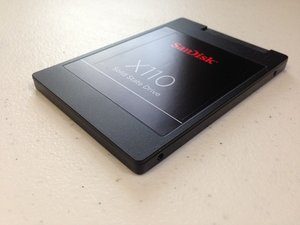 Big changes are in the works in the SSD-based storage ecosystem. It includes three different vendors all making similar announcements regarding designs to help companies that rely on SSD-based storage systems to reduce duplication and control data creep.
 Brinker International (the parent company of the Chili’s restaurant chain) formally announced that on May 11, they discovered malware on an undisclosed number of their point of sales terminals. Details are sketchy at this point, because the investigation is still ongoing, but the company had the following to say about the incident:
 An identity threat company called 4iQ has recently published a report called “Identities in the Wild: The Tsunami of Breached Identities Continues.” Unfortunately, the information in the report contains all bad news. Some of the details are simply confirmations of things we already knew, and some are shocking statistics that will leave you feeling dismayed.
 There’s a new security threat to be worried about, and security professionals are warning that it could be very bad indeed. The new malware is known as the “Vega Stealer,” and is currently being used in a relatively simplistic phishing campaign designed to harvest financial data that has been saved in both Google Chrome and Firefox browsers. Unfortunately, based on an analysis of the code, it could be a much more serious threat.
 Hulu recently announced that it would join both Netflix and Amazon Prime in allowing its users to download content to watch offline, but in Hulu’s case, it comes with a twist.
 In terms of toys, what could possibly be better than LEGOS? How about LEGOS, combined with Alexa? That’s the latest idea from Amazon, who has paired the unlikely duo in a newly announced service called “LEGO Duplo Stories.” The new service (“skill,” in the parlance of Alexa) will be available on any device that offers Alexa support including Echo Dot and Amazon Echo. It provides a selection of stories with audio prompts that guide children in the construction of something with their LEGO Duplos that ties in with the story being told.