
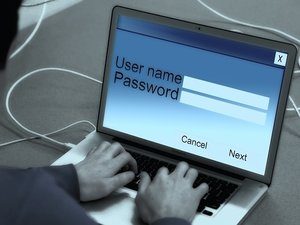
 Karanbir Singh (a program manager at Microsoft) is on a mission:
Kill the password.
As he said in a recent blog post:
“Nobody likes passwords. They are inconvenient, insecure, and expensive. In fact, we dislike them so much that we’ve been busy at work trying to create a world without them–a world without passwords.”
The company’s stated goal is to make it possible that an end user will never have to bother with passwords on a day to day basis and would instead provide credentials that are virtually impossible for hackers to crack or breach.
To accomplish this goal, the company is looking at a number of options, including biometrics and multi-factor authentication schemes.
Singh notes that this isn’t just blue-sky thinking, either. Already, more than 47 million users and more than five thousand businesses are utilizing “Windows Hello for Business.” Another solution currently in use is the Microsoft Authenticator app, which allows users to access their Microsoft accounts via their smartphones.
Additionally, as part of the Windows 10 update issued in April (2018), any user with a Managed Service Account or Azure Active Directory can now access their Windows 10 PC without having to enter their password, via the authenticator app and Windows Hello (provided that S-mode is enabled).
The company is also taking advantage of the newly ratified Fast Identity Online (FIDO2) security protocol, and is in the process of updating Windows Hello to enable secure authentication across a wider range of scenarios. For example: The company is currently working on a proof of concept for shared PCs that will allow users to log on via FIDO2 security keys, which will allow employees to carry their credentials with them.
They envision a scenario in which any user can simply walk up to any device the organization controls and authenticate without ever having to enter their username or password. This would be especially useful for analysts, help desk personnel, and anyone working in the medical profession.
Obviously no firm time-frames have been given, but as mentioned, some of these technologies are already in use and will be refined in the months ahead.

President & CEO
I hope you enjoyed this article. My mission is to take your stress away from dealing with IT problems. Call (252) 565-1235 or send me a message at our contact us page if you have a question, comment or want help.
 Before Google released its Chrome browser, Firefox felt pretty good about their arrangement. They got a handsome reward in exchange for making Google.com their default search engine. It was a win-win.
 Microsoft has been having some “issues” of late. It’s April Windows 10 rollout had to be delayed on account of some mysterious BSOD (“Blue Screen of Death”) issues. This month’s rollout is plagued by similar problems, trading the BSOD issues for problems with both “Hey Cortana” and Google’s Chrome browser.
 Apple promised that its iTunes app would be available on the Microsoft Store by the end of 2017. The announcement was greeted with enthusiasm, but unfortunately, the company didn’t meet their own deadline. They cited the need for more time to build a more robust user experience for Windows users.
 Security researcher Assaf Baharav from Check Point Security has discovered a new twist on an old, fairly well-known attack. He was able to essentially “weaponize” PDFs to steal Windows credentials stored in NTLM hashes. Unfortunately, no action other than simply opening the PDF is required for the hacker to gain access to the information.
 Last year’s Wannacry attack was bad, but in many ways, it was a self-inflicted wound. According Webroot’s recently published “Annual Threat Report,” almost all of the machines that succumbed to the Wannacry attack were running Windows 7. That attack is estimated to have caused in excess of $4 billion in total losses.
 If you are a fan of, and regularly use Goo.gl (the URL shortener service), brace for impact. The company has announced that as of March 30, 2019, the service will be shut down for good. Long before then, beginning April 18th of this year, only existing users will be able to shorten links via goo.gl. No new signups will be allowed.
 Researchers at Preempt Security recently discovered a critical flaw in Microsoft’s Credential Security Support Provider protocol (CredSSP for short) that impacts every version of Windows in existence. It could allow a hacker to remotely exploit Windows Remote Desktop to execute malicious code and steal any data stored on the machine.
 According to a Microsoft security researcher, a massive malware attack attempted to install a cryptocurrency mining software on more than 400,000 computers in less than twelve hours. The failed campaign is noteworthy because of the attack vector used. It was a supply chain attack implemented by compromising Bittorrent, a highly popular program used to share and download files.
 A Reddit user named “Noam_ha” recently posted a screenshot displaying a popup message when users open the venerable Windows Media Player (WMP), asking users if they would instead like to open the video file with the company’s more modern Movies and TV app.

