 Intel has had a tough time of things so far this year. The most recent trouble stems from yet another newly discovered security flaw in the company’s processors, bearing the inelegant name of “L1 Terminal Fault,” or “Foreshadow” by those who have discovered it.
The attack can take one of three different shapes (so far), and ultimately allows a hacker to access sensitive data stored in the computer’s memory or on third-party cloud-based storage services. This sensitive data includes passwords, pictures, other sorts of data files, and encryption keys.
The three variants of the attack have been grouped into two distinct categories, known as Foreshadow and Foreshadow NG (Next Gen).
The standard Foreshadow variant (Reference CVE-2018-3615) targets Intel’s Software Guard Extensions (SGX), which is new technology designed by intel to help keep user data from falling into the wrong hands, even if the whole system comes under attack.
As the researchers who discovered it describe it:
“Foreshadow enables an attacker to extract SGX sealing keys, previously sealed data can be modified and re-sealed. With the extracted sealing key, an attacker can trivially calculate a valid Message Authentication Code (MAC), thus depriving the data owner from the ability to detect the modification.”
The Foreshadow: Next Generation attack (reference CVE-2018-3620 and CVE-2018-3646) targets virtualization environments like those used by large cloud-based service providers like Microsoft and Amazon.
From the researchers again:
“Using Foreshadow-NG, a malicious program running on the computer might be able to read some parts of the kernel’s data. As the kernel has access to data stored by other programs, a malicious program might be able to exploit Foreshadow-NG to access data belonging to other programs.
Foreshadow is different from Meltdown as it targets virtual machines and SGX, in addition to data stored in the operating system’s kernel (which was targeted by Meltdown).”
According to Intel, none of these attacks have been seen in the wild, but of course, that’s just a matter of time now. No word from Intel yet on a time frame to address these issues, but stay tuned.

President & CEO
I hope you enjoyed this article. My mission is to take your stress away from dealing with IT problems. Call (252) 565-1235 or send me a message at our contact us page if you have a question, comment or want help.
 Nothing bad could possibly happen to your company’s network if the only piece of information the hackers have is your fax number, right?
 How seriously does the average consumer take data theft? It’s an interesting (and fair) question, and one that Radware recently attempted to answer when the company sent out surveys. They contacted more than three thousand people to conduct its recent survey titled “Consumer Sentiments: Cybersecurity, Personal Data and the Impact on Customer Loyalty.”
 There’s a new, surprisingly elaborate phishing scam targeting iPhone users. The scam starts with an email informing users that their phones have been locked due to “illegal activity” and instructing them to call “Apple Care” to get the problem fixed.
 Mimecast’s 2018 “State of Email Security” report is out, and although it’s contents are hardly a surprise, the news it contains is mostly bad.
 There is a small but significant change from Google, with the release of Chrome 68. The updated browser will now prominently notify browsers when they surf their way to non-HTTPS websites, displaying them as “Not Secure.”
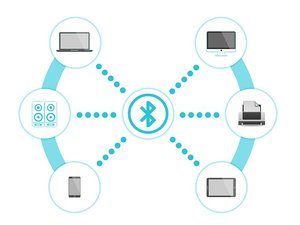 There’s a new Bluetooth security vulnerability to be aware of, tracked as CVE-2018-5383, and it’s a nasty one.
 If you’re like most people, you probably rely heavily on the GPS function of your phone. Type in an address and your phone helpfully guides you, turn by turn, to your destination. It’s one of the most often utilized features of a smartphone, and of course, the hackers are very interested in interfering with it.
 Positive Technologies has just released a new report that paints a grim picture for IT professionals. If your sense is that the number of cyberattacks are increasing, you’re not wrong. In fact, it’s probably worse than you realize.