 Symantec’s most recent statistics have revealed a disturbing trend. Malware designed to compromise checkout pages is seeing a big spike in use, with the company reporting a staggering 248,000 attempts since August 13th of this year, with more than a third of them (36 percent) between September 13th through September 20th. As disturbing as those numbers are, that’s just the tip of the iceberg.
As Symantec notes on their website:
“If we compare the week of September 13 to 20 to the same week in August, the number of instances of formjacking attacks blocked by Symantec more than doubled, jumping from just over 41,000 to almost 88.500 – a percentage increase of 117 percent.”
Leading the surge is a particularly nasty strain of malware known as “Magecart.” Magecart campaigns are quite robust that begin by breaching the target website, then injecting malicious scripts into it that are designed to scrape card details and other customer information provided during the checkout process. This is an attack that’s alternately known as formjacking, payment card scraping, and web-based skimming.
Symantec isn’t the only company to take note of the trend. RiskIQ has been sink holing domains associated with Magecart infrastructure for much of the month and alerting companies compromised by Magecart attacks as they find them.
Kevin Beaumont, an independent security researcher, had this to say via Twitter :
“#TrackingMagecart I’ve updated the IoCs to double the number of domains, now tracking over 1000 objects – some of the domains have now been sink holed. Recommend InfoSec vendors block/flag domains.”
Magecart isn’t new. Security researchers have been tracking it since 2015, and independent researcher Willem de Groot has created a malware scanning website called MageReport, which allows business owners to check to see if their Magento-based webshop is vulnerable to this type of attack. If you think you might be, it certainly bears making use of.
At present, the one thing that’s not known is the reason behind the sudden spike. Only that it’s happening.

President & CEO
I hope you enjoyed this article. My mission is to take your stress away from dealing with IT problems. Call (252) 565-1235 or send me a message at our contact us page if you have a question, comment or want help.
 According to this year’s Traveler’s Risk Index, published by The Traveler’s Indemnity Company, a majority of business owners have a somewhat fatalistic view of hacking and data breaches.
 If you use the GovPayNet portal, be advised that your personal information is currently at risk. Although at this point, there’s no indication that any hacker has made use of it. The portal is run by Government Payment Service, and is used by many Americans to pay fines, fees and bills generated by more than two thousand different government agencies operating in 35 states.
 A new piece of legislation is making its way through the halls of Congress that could standardize and streamline the data security and breach notification process for financial institutions. This is something that most people in the industry tout as an improvement over the current situation.
 Users of Apple tech have a new reason to worry. A security researcher named Sabri Haddouche, who works for an instant messaging app called “Wire,” has published a proof of concept web page. It contains a fatal exploit that can crash and restart iPhones, iPads and any Mac.
 Western Digital has a big problem, and if you use the company’s “My Cloud” network-attached storage (NAS) storage devices, you’ve got one too. The WD My Cloud service is enormously popular because it’s so convenient, allowing both business owners and individuals to store their files, perform periodic backups, and of course, access their data from anywhere in the world.
 We’ve known for some time now that the next big crisis the internet will have to come to grips with is the dramatic rise of the Internet of Things (IOT).
 There’s a new report out, authored by ProofPoint, and its findings for business are grim.
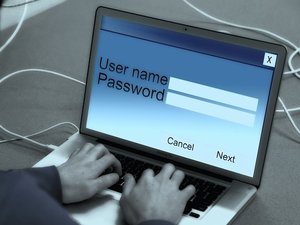 Perhaps the most significant change to the browser is the addition of a new password manager, which will offer to generate a random password when you sign into a website for the first time. The randomly generated password will be securely tucked away inside your Google Account and synced across both desktop and mobile versions of Chrome.
 The Internet on devices continues to be a major problem when it comes to security. Unfortunately, a big part of the reason why comes down to end users. Recently, Bitdefender released a new report entitled “The IoT Threat Landscape And Top Smart Home Vulnerabilities in 2018,” and it paints a grim picture indeed.