 It looks like it’s going to be another bad month for Equifax. The company just can’t seem to get out of its own way.
In 2017, the company announced a massive data breach that (it initially claimed) impacted some 140 million users. Several months after the official announcement, the company was forced to revise the number of impacted users upward, as the forensic investigation into the breach continued.
Now, the company has announced a further upward revision of 2.4 million, bringing the total number of impacted users to slightly more than 148 million.
Equifax CEO Paulino do Rego Barros Jr. had this to say about the announcement, which raised more than a few eyebrows:
“This is not about newly discovered stolen data. It’s about sifting through the previously identified stolen data, analyzing other information in our databases that was not taken by the attackers, making connections that enabled us to identify additional individuals.”
As it did originally, the company has also announced that it would notify the newly identified consumers and offer them free credit monitoring and identity theft protection at no cost.
After last year’s congressional hearings on the matter, this portion of the announcement tends to illicit eyerolls. The company is in the credit monitoring business, and the way the company offers its “free” protection is that at the end of the free period, it automatically rolls into a paid plan unless the user cancels the service.
Of course, as with most such schemes, a high percentage of users won’t think about it until they get their first bill. One of the more acidic comments made during last year’s hearings was that the company actually seems to be profiting from their own data breach. That makes the CEO’s statement that “We are committed to regaining the trust of consumers, improving transparency, and enhancing security across our network” ring a bit hollow.
 Google has another new product out. A slimmed down, streamlined version of the Android OS called “Go.” Unfortunately, it’s release didn’t gather as much press as you’d expect when a new OS is released. The reason for that is simple. The new, slimmer, sleeker Android Go was designed for low-end phones with limited storage capacity, which don’t typically get much press either.
 Do you have a Mi-Cam in your home? Even if you don’t have kids, you may have one. They’re a highly popular, inexpensive means of keeping tabs on the comings and goings inside your home when you’re not around.
 If you’re in the market for a new laptop but can milk a little more life out of the one you’ve got, 2019 will be the year to buy. The reason? 5G. AT&T is slated to become the first carrier to offer 5G network connectivity to small segments of its customer base this year (starting in Atlanta, Dallas, and Waco, and then slowly spreading to other areas).
 Depending on who you ask, Google’s Project Zero is either the thing that’s going to singlehandedly save the internet, or the bane of many companies’ existence. It’s easy to see both sides of the argument.
 AT&T has big plans for their future and yours. If they’re your carrier of choice, and if you live in the cities of Dallas, Atlanta, or Waco, then you stand to be on the cutting edge of the changes the company has in store. Those locations have been selected to be the first to receive AT&T’s 5G network upgrade.
 Android users have a reason to cheer. According to the latest report by ESET, the number of ransomware attacks targeting Android devices declined in 2017. The decline represents a bit of an anomaly, given that in 2017, the most common type of malware attack (by a wide margin) was ransomware. Given that security researchers can’t name a particular reason for the decline, it’s important not to read too much into the data. Whether there are declining figures or not, ransomware attacks still played a prominent role in last year’s threat landscape across a whole spectrum of devices. This year is shaping up to be no different.
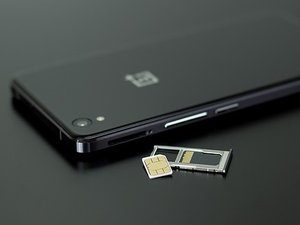 SIM cards have long been a source of frustration for equipment manufacturers. With the relentless drive to produce smaller and smaller devices, the SIM card is a hurdle to be overcome. It’s relatively large, and when you account for the necessary housing, it becomes quite the design challenge.
 Recently, another “exotic character” bug was found in iOS. If someone sends this particular character (a special character that’s part of the Indian language pack) to your phone via any messaging app, it will not only crash your phone, but cause a variety of messaging apps to stop functioning.
 Do you own a Mac? Do you use APFS “sparse disk images?” If so, be aware that under certain conditions, your trusty computer may allow you to copy important data into the void where it will be lost forever, without giving you a heads up first.