 The CEO of Trustico, a TLS certificate reseller based in the United Kingdom, finds himself at the center of a controversy that raises a number of disturbing questions about browser-trusted security certificates.
The email in question was sent to Jeremy Rowley, an executive Vice President at DigiCert. The catalyst that prompted the fateful email was that officials at Trustico notified DigiCert that 50,000 certificates originally issued by Symantec and resold by Trustico had been compromised and should be mass revoked due to security concerns.
Mr. Rowley, not wanting to take such drastic action without proof, asked for it. In response, Trustico’s CEO emailed the private keys of 23,000 certificates, an action which drew shocked reactions from security professionals around the world when news of the email became public.
If you’re not familiar with the inner workings of browser-trusted certificates, there are a few problems here. First, there’s no good reason why a reseller should have a copy of the private keys to begin with. Second, even if that were the norm, to simply email them to a third party shows incredibly poor judgement, especially given that there’s no evidence the email in question was encrypted. Third, customers used Trustico’s website to generate their private keys, which is a service that should never even have been offered.
To make matters even worse, not long after news of the email hit the internet, Trustico’s website went dark, when a security expert posted details about a critical vulnerability on the company’s website. The flaw resides in a site feature that allows customers to confirm that certificates are properly installed. Unfortunately, Trustico’s website had been compromised and any time a user would use the feature, the hackers could use the opportunity to run malicious code. It’s a tangled web, and it paints everyone involved in a very bad light.
 It looks like it’s going to be another bad month for Equifax. The company just can’t seem to get out of its own way.
 Google has another new product out. A slimmed down, streamlined version of the Android OS called “Go.” Unfortunately, it’s release didn’t gather as much press as you’d expect when a new OS is released. The reason for that is simple. The new, slimmer, sleeker Android Go was designed for low-end phones with limited storage capacity, which don’t typically get much press either.
 Do you have a Mi-Cam in your home? Even if you don’t have kids, you may have one. They’re a highly popular, inexpensive means of keeping tabs on the comings and goings inside your home when you’re not around.
 If you’re in the market for a new laptop but can milk a little more life out of the one you’ve got, 2019 will be the year to buy. The reason? 5G. AT&T is slated to become the first carrier to offer 5G network connectivity to small segments of its customer base this year (starting in Atlanta, Dallas, and Waco, and then slowly spreading to other areas).
 Depending on who you ask, Google’s Project Zero is either the thing that’s going to singlehandedly save the internet, or the bane of many companies’ existence. It’s easy to see both sides of the argument.
 AT&T has big plans for their future and yours. If they’re your carrier of choice, and if you live in the cities of Dallas, Atlanta, or Waco, then you stand to be on the cutting edge of the changes the company has in store. Those locations have been selected to be the first to receive AT&T’s 5G network upgrade.
 Android users have a reason to cheer. According to the latest report by ESET, the number of ransomware attacks targeting Android devices declined in 2017. The decline represents a bit of an anomaly, given that in 2017, the most common type of malware attack (by a wide margin) was ransomware. Given that security researchers can’t name a particular reason for the decline, it’s important not to read too much into the data. Whether there are declining figures or not, ransomware attacks still played a prominent role in last year’s threat landscape across a whole spectrum of devices. This year is shaping up to be no different.
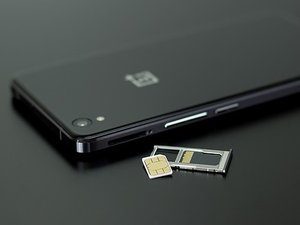 SIM cards have long been a source of frustration for equipment manufacturers. With the relentless drive to produce smaller and smaller devices, the SIM card is a hurdle to be overcome. It’s relatively large, and when you account for the necessary housing, it becomes quite the design challenge.
 Recently, another “exotic character” bug was found in iOS. If someone sends this particular character (a special character that’s part of the Indian language pack) to your phone via any messaging app, it will not only crash your phone, but cause a variety of messaging apps to stop functioning.