 Anthem is one of the largest insurance providers in the United States. Unfortunately in 2015, they had the dubious honor of suffering the largest health data breach in history. It left protected health information of nearly 79 million of their customers exposed.
As a result, a division of the US Department of Health and Human Services called the Office for Civil Rights (OCR), levied the largest fine against the company in the agency’s history. They were fined a staggering sixteen million dollars.
An investigation into the matter revealed that Anthem had not put sufficient safeguards in place to protect patient data. As a result, hackers were able to breach the system via a phishing attack and make off with customer names, addresses, dates of birth, social security numbers, email addresses and employment information.
The Director of OCR, Roger Serverino, had this to say:
“The largest health data breach in US history fully merits the largest HIPAA settlement in history. Unfortunately, Anthem failed to implement appropriate measures for detecting hackers who had gained access to their system to harvest passwords and steal people’s private information. We know that large health care entities are attractive targets for hackers, which is why they are expected to have strong password policies and to monitor and respond to security incidents in a timely fashion or risk enforcement by OCR.”
Tim Sadler, the CEO of Tessian, added the following:
“During the three years since the Anthem breach took place, spear-phishing attacks have increased significantly in their indistinguishability and effectiveness. Yet human error has remained inherent, inevitable, and largely ignored as a security vulnerability by organizations.”
He concluded his remarks by pointing out that advanced AI algorithms and machine learning could be employed to help spot the kinds of attacks used to such great effect against Anthem, in order to minimize the risks going forward.
If your business is in any way connected to the healthcare industry, this approach certainly bears further investigation.

President & CEO
I hope you enjoyed this article. My mission is to take your stress away from dealing with IT problems. Call (252) 565-1235 or send me a message at our contact us page if you have a question, comment or want help.
 We’ve known for some time now that the next big crisis the internet will have to come to grips with is the dramatic rise of the Internet of Things (IOT).
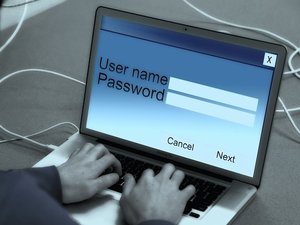 Perhaps the most significant change to the browser is the addition of a new password manager, which will offer to generate a random password when you sign into a website for the first time. The randomly generated password will be securely tucked away inside your Google Account and synced across both desktop and mobile versions of Chrome.
 Tech Support scams are nothing new, but they are getting increasingly sophisticated. Worse, tech giants like Google are finding it notoriously difficult to detect them.
 2017 was “The Year of Ransomware.” It saw an incredible number of ransomware attacks and infections, paired with a tremendous number of innovations.
 Security researcher Assaf Baharav from Check Point Security has discovered a new twist on an old, fairly well-known attack. He was able to essentially “weaponize” PDFs to steal Windows credentials stored in NTLM hashes. Unfortunately, no action other than simply opening the PDF is required for the hacker to gain access to the information.
 Congratulations to Adobe Flash Player for not being the software most targeted by hackers. Security vendor “Recorded Future” has just published their annual list of the software hackers most commonly focus on when targeting computers and handheld devices for attack.
 It looks like it’s going to be another bad month for Equifax. The company just can’t seem to get out of its own way.
 There’s a new strain of the “Rapid Ransomware” making the rounds, and because of how it’s being transmitted, it’s destined to have a higher than average rate of infection. The new strain was first discovered by Derek Knight. It is disturbing because it claims to come from the IRS, and will feature subject lines like “IRS Urgent Message-164.”
 Do you use any of the following Chrome browser extensions?