 The Department of Health and Human services has issued a warning to healthcare providers to be on high alert for the SamSam strain of ransomware, which has been used to attack eight different health care entities so far this year.
SamSam made its first appearance in 2016 and is seeing increasingly widespread use so far this year. Unfortunately, the healthcare industry is considered by most to be a soft target. On the Dark Web, healthcare data has become more highly sought after than credit card data, which is only going to put more healthcare entities at risk.
The most tragic component of this is that when a hospital’s network goes down, they stand to lose more than just money and control over patient data. Lives are also at risk. Although none of the attacks to this point have resulted in patient deaths, it’s statistically inevitable. As these attacks continue to increase in frequency, scope and scale, sooner or later, someone will die because of them.
According to security experts, the root of the problem lies in the fact that guarding against such attacks is seen as fundamentally an IT issue. The truth is that it is an organization-wide issue, and should be treated as such, because attacks like these pose an existential threat. Treating the issue as something for a single department to be responsible for inevitably leads to a lack of funding and an inadequate incident response plan. This leaves most organizations completely unprepared to deal with an attack and its aftermath.
Even more worrisome is the fact that an increasing number of ransomware attacks simply destroy the data. Sure, the ransom note still gets displayed, but the hackers simply have no intentions of unlocking the files, and they build their software accordingly. Most recently, hackers have taken to corrupting encrypted data files, which can cause lingering problems for months or even years after they’re unlocked.
This problem is only going to get worse until we all start taking data security more seriously.

President & CEO
I hope you enjoyed this article. My mission is to take your stress away from dealing with IT problems. Call (252) 565-1235 or send me a message at our contact us page if you have a question, comment or want help.
 Twitter shot itself in the foot recently but is working hard to get out in front of the problem. According to a recent blog post, the company experienced an issue with its hashing routine – a process which masks user passwords, making them virtually impossible to crack.
 Apple promised that its iTunes app would be available on the Microsoft Store by the end of 2017. The announcement was greeted with enthusiasm, but unfortunately, the company didn’t meet their own deadline. They cited the need for more time to build a more robust user experience for Windows users.
 The on-again, off-again talks about a merger between T-Mobile and Sprint is definitely back on, with T-Mobile planning to buy Sprint for a staggering $26 billion.
 Thanks to researchers Daan Keuper and Thijs Alkemade (who work at the Dutch cyber-security firm Computest), newly produced Golf GTE and Audi A3 vehicles are a little bit safer, and a lot less vulnerable to remote hacks.
 Score one for the good guys, but with hesitation. Unfortunately, in today’s fast-moving digital world, even a victory doesn’t mean the end of a problem.
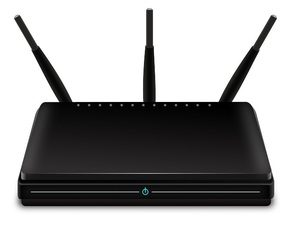 After more than two decades in the business, Apple is officially going to stop selling routers. The writing has been on the wall for a while now, since the company’s “AirPort” family of products hasn’t received a significant update in more than five years.
 Security researcher Assaf Baharav from Check Point Security has discovered a new twist on an old, fairly well-known attack. He was able to essentially “weaponize” PDFs to steal Windows credentials stored in NTLM hashes. Unfortunately, no action other than simply opening the PDF is required for the hacker to gain access to the information.
 Owners of Apple devices have a new attack vector to worry about, called “TrustJacking.” Symantec researchers recently stumbled across a pair of scenarios that take advantage of Wi-Fi syncing of various Apple devices. These are scenarios that also take advantage of the trust users have in the security of their own devices, allowing hackers to take complete control over those devices.
 Recently, a new strain of malware called “SquirtDanger” has been found by researchers at Palo Alto Networks Unit 42, and it’s a particularly nasty one for a couple of reasons. First and foremost, the owner of the malware isn’t orchestrating campaigns himself, but rather, selling his product as a commodity on the Dark Web.