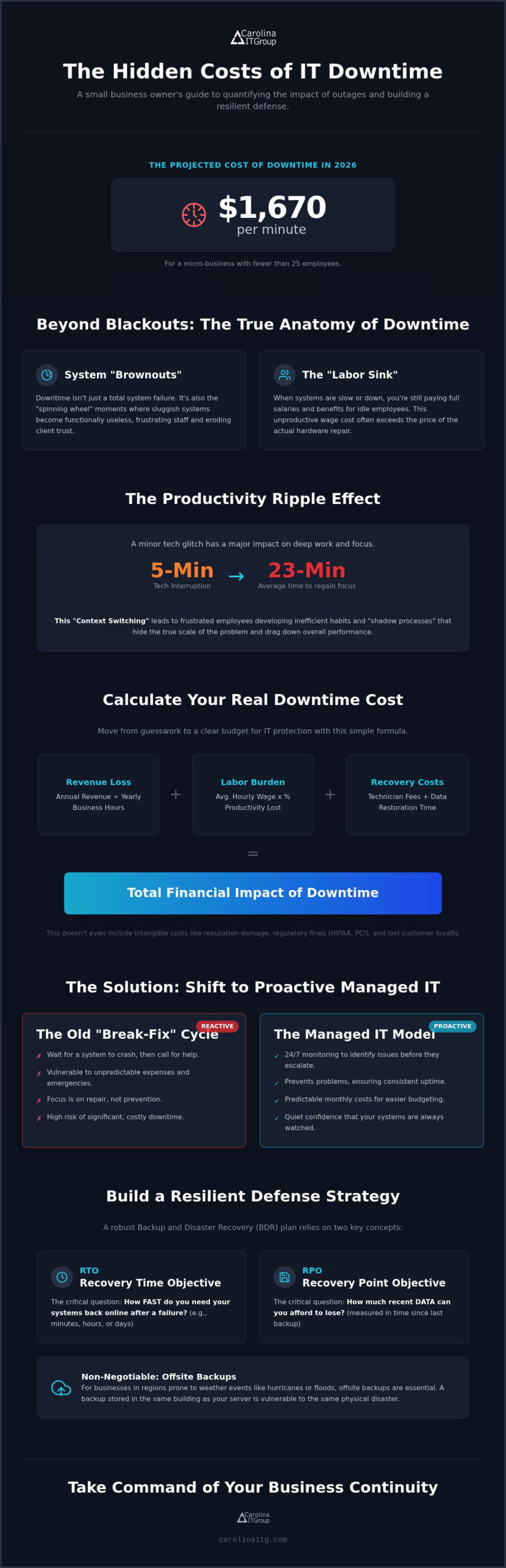
For a micro-business with fewer than 25 employees, the cost of downtime for small business in 2026 has climbed to a staggering $1,670 per minute. It’s a heavy price for a simple glitch. You likely already know the frustration of watching your team sit idle during “spinning wheel” moments while your payroll clock keeps ticking. It’s stressful to worry that a single outage or ransomware threat could derail your entire week. We’re here to help you build a disciplined defense, move past the tech anxiety, and get back in control.
This article will show you how to quantify the hidden financial and operational impacts of IT outages and discover proactive strategies to protect your business. We’ll provide a clear formula to calculate your specific downtime impact and the evidence needed to support a budget for proactive IT. You’ll learn how better backup systems can finally bring you true peace of mind.
Key Takeaways
- Identify the “labor sink” and system brownouts to understand the full financial impact of IT issues beyond just missed sales.
- Apply a step-by-step formula to accurately measure the real cost of downtime for small business by combining hourly revenue loss and labor burden.
- Learn why shifting from reactive “break-fix” repairs to proactive Managed IT services eliminates the costly surprises of sudden outages.
- Discover how 24/7 monitoring and Backup and Disaster Recovery systems serve as a veteran-disciplined defense for your company’s continuity.
Beyond Lost Sales: The Hidden Anatomy of Downtime Costs
Many owners think of downtime as a total system blackout. In reality, a comprehensive look at What is Downtime? includes “brownouts,” where systems are so sluggish they become functionally useless. These moments create a massive “Labor Sink.” You’re still paying full salaries and benefits while your team stares at a frozen screen or waits for a file to save. When you calculate the cost of downtime for small business, you must include these unproductive wages. It’s money leaving your bank account with zero return on investment, often costing more than the hardware repair itself.
Beyond the immediate financial drain, chronic tech failures cause an intangible erosion of your business. Clients today expect immediate responses. If your systems lag during a call, they lose trust in your professionalism. Reducing the cost of downtime for small business isn’t just about speed; it’s about protecting your hard-earned reputation. Internally, your best people start to feel defeated by the tools meant to help them, leading to burnout and a culture of frustration.
The Ripple Effect on Employee Productivity and Morale
The damage doesn’t stop once the “spinning wheel” disappears. Research suggests it takes an average of 23 minutes to regain deep focus after a tech interruption. This “context switching” means a five-minute glitch actually steals nearly half an hour of high-value productivity. Over time, frustrated employees develop clunky workarounds that become permanent, inefficient habits. These “shadow processes” hide the true scale of the problem until it’s too late. Choosing Small-to-mid-sized business solutions ensures your team stays focused on their roles rather than troubleshooting their workstations. Reliability is the foundation of a high-performance culture.
How to Calculate the Real Cost of Downtime for Your Business
Calculating the cost of downtime for small business doesn’t require complex data center audits. A practical formula helps you move from guesswork to a clear budget for protection. First, identify your Revenue per Hour by dividing your total annual revenue by your yearly business hours. This represents the sales that simply stop when your systems do. Next, calculate your Labor Burden. Take the average hourly wage of affected employees and multiply it by the percentage of productivity lost. This step is vital because the total cost of downtime for small business often hides in your payroll. Finally, add your Recovery Costs, including emergency technician fees and data restoration time.
These tangible numbers are just the beginning. You also have to account for the hidden costs of downtime, such as the long-term impact on customer loyalty. If you’re unsure where to start with these numbers, you can request a technology review to get a clearer picture of your specific risks.
Factoring in Reputation Damage and Regulatory Fines in NC
In North Carolina, our local businesses face unique pressures. Whether it’s a Raleigh medical clinic managing HIPAA compliance or a Wilmington retailer processing PCI-governed payments, an outage often leads to a breach of protocol. A single day of downtime can trigger a churn event where long-term clients move to a competitor who seems more stable. In our region, we also deal with weather-related grid issues that make Cybersecurity Services in NC essential for preventing fine-heavy data exposures during recovery. Protecting your uptime isn’t just about convenience; it’s about staying compliant with state and federal laws.
The Managed IT Solution: Investing in Uptime and Resilience
Most business owners are used to the “break-fix” cycle. You wait for a crash, call a technician, and hope for a quick fix. This reactive approach is a primary driver of the high cost of downtime for small business because it leaves you vulnerable to unpredictable expenses and lost productivity. Moving to a Managed IT model shifts the focus to prevention. We use 24/7 monitoring to identify a failing drive or a network bottleneck before it escalates into a full-scale office shutdown. This proactive stance provides the quiet confidence that your systems are being watched by experts. Our veteran-led approach to Managed IT Support ensures the discipline required to maintain consistent uptime and protect your bottom line from technical surprises.
Building a Proactive Backup and Disaster Recovery Strategy
A resilient strategy relies on two plain-English concepts: Recovery Time Objective (RTO) and Recovery Point Objective (RPO). Your RTO is simply how fast you need your systems back online after a failure. Your RPO defines how much data you can afford to lose, measured in time since your last backup. For North Carolina businesses in Greenville, Raleigh, or Wilmington, offsite backups are a non-negotiable requirement to survive regional weather events like hurricanes or local flooding. If your only backup is sitting in the same building as your server, a single storm could be catastrophic. We encourage you to Contact Carolina IT Group for a professional downtime risk assessment. Investing in these safeguards now is the best way to control the cost of downtime for small business while securing your company’s future.
Take Command of Your Business Continuity
Understanding the cost of downtime for small business is the first step toward building a more resilient company. You now have the tools to calculate the hidden impact of labor sinks and reputation damage that reactive “break-fix” models often ignore. By prioritizing 24/7 proactive monitoring and robust backup strategies, you protect your team from the frustration of idle hours and your brand from the sting of lost client trust.
Since 1995, our U.S. Navy veteran-led team has provided disciplined IT support to businesses across Greenville, Raleigh, and Wilmington. We believe technology should be a source of stability, not stress. If you’re ready to move from reactive repairs to proactive peace of mind, we are here to help. Request a Free Downtime Risk Assessment with Carolina IT Group today. Let’s ensure your systems stay as dependable as your reputation.
Frequently Asked Questions
What is the average cost of downtime for a small business in 2026?
In 2026, the average cost of downtime for small business with fewer than 25 employees is approximately $1,670 per minute. This adds up to roughly $100,000 per hour. These figures include lost sales, idle labor costs, and recovery efforts. For local firms in Greenville or Raleigh, even a brief outage can significantly drain cash reserves and disrupt long-term growth.
How can I prevent downtime without hiring a full-time IT person?
You can prevent outages by partnering with a Managed IT Services provider instead of hiring an in-house technician. This model gives you access to a veteran-led team that provides 24/7 proactive monitoring at a fixed monthly rate. We catch hardware failures or security threats in Wilmington or Raleigh before they halt your operations, allowing you to focus on your business.
Is cybersecurity insurance enough to cover my downtime losses?
Cybersecurity insurance is a vital safety net, but it rarely covers the full cost of downtime for small business. Most policies don’t reimburse you for permanent reputation damage, lost customer trust, or the stress of a week-long shutdown. Insurance helps with the financial recovery, but proactive network security and backup systems are what actually keep your doors open.
What is the difference between a backup and a disaster recovery plan?
A backup is simply a copy of your data, while a disaster recovery plan is the roadmap for how you use that data to get back to work. If a hurricane hits Wilmington, having a backup doesn’t help if you don’t have a way to access it quickly. A true recovery plan includes offsite storage and a disciplined strategy to restore your systems.

President & CEO
I hope you enjoyed this article. My mission is to take your stress away from dealing with IT problems. Call (252) 565-1235 or send me a message at our contact us page if you have a question, comment or want help.